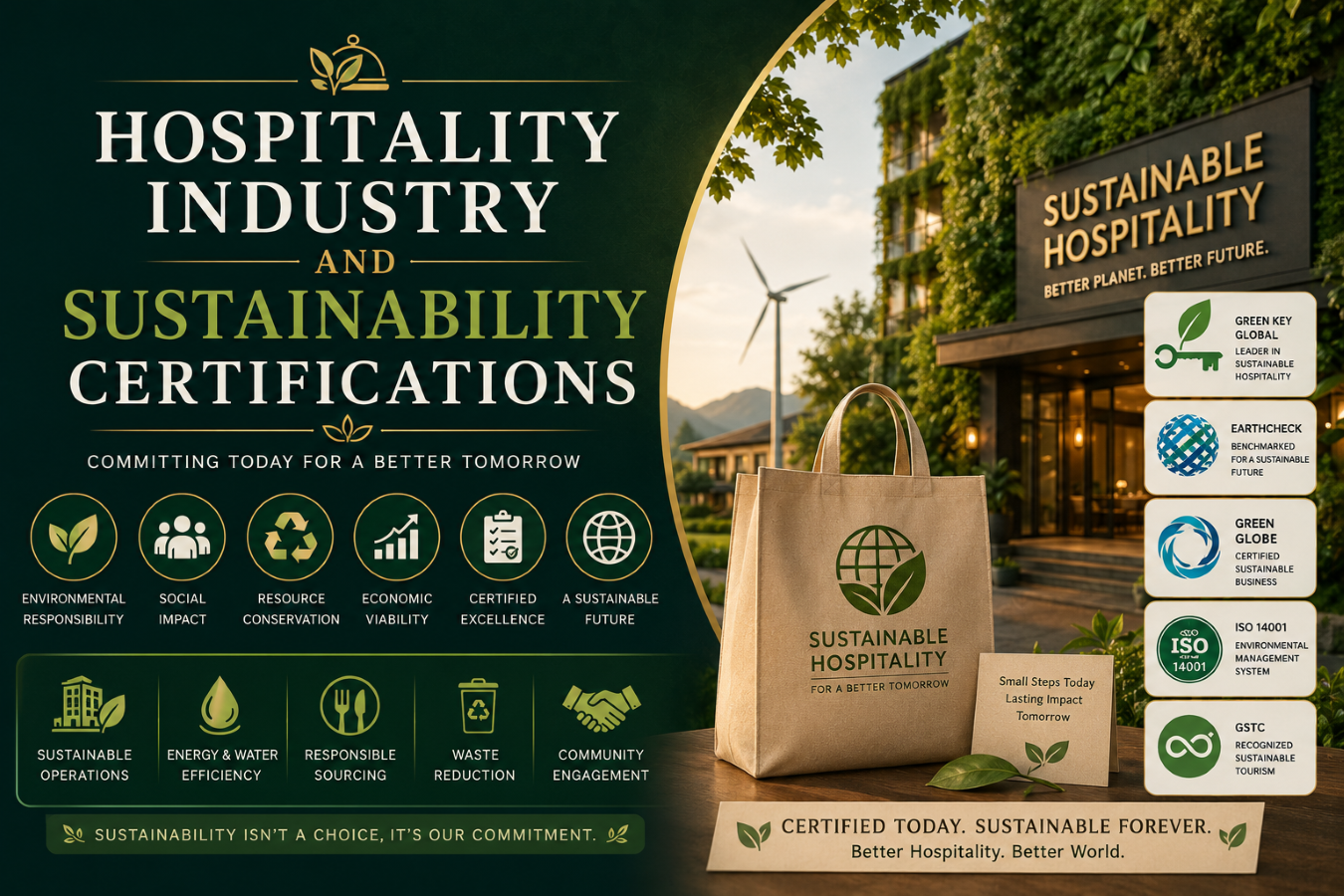
Sustainability has become one of the most influential trends shaping the global hospitality industry. As travelers become increasingly conscious of environmental and social issues, hotels, resorts, restaurants, and hospitality organizations are under growing pressure to operate responsibly. Guests today are not only evaluating accommodations based on comfort, location, and pricing but also on a property’s commitment to sustainability and ethical business practices.
In response to this shift, sustainability certifications have emerged as valuable tools for hospitality businesses seeking to demonstrate their environmental responsibility and commitment to sustainable operations. These certifications provide recognized standards that help organizations measure, improve, and communicate their sustainability efforts. More importantly, they build trust among guests, investors, business partners, and regulatory bodies.
At BookSmart, we believe sustainability certifications are no longer optional for hospitality organizations aiming to remain competitive in a rapidly evolving marketplace. They serve as powerful indicators of operational excellence, environmental stewardship, and long-term business resilience.
Understanding Sustainability in the Hospitality Industry
Sustainability in hospitality refers to operating hotels, resorts, restaurants, and tourism-related businesses in ways that minimize environmental impact while supporting social and economic well-being. This approach focuses on balancing profitability with responsible resource management and community engagement.
Sustainable hospitality practices typically include energy conservation, water management, waste reduction, sustainable sourcing, carbon footprint reduction, biodiversity protection, employee welfare, and support for local communities.
As climate change, resource scarcity, and environmental regulations become increasingly important global concerns, hospitality businesses are recognizing the need to adopt more sustainable operational models.
Sustainability certifications provide structured frameworks that help organizations implement, measure, and continuously improve these efforts.
Why Sustainability Certifications Matter
Sustainability certifications offer independent verification that a hospitality organization meets established environmental and social responsibility standards. Rather than relying solely on marketing claims, businesses can demonstrate their commitment through recognized third-party assessments.
Certified properties often enjoy several benefits, including enhanced brand reputation, improved guest trust, operational cost savings, regulatory compliance, and increased market competitiveness.
Many corporate clients, travel agencies, event organizers, and environmentally conscious travelers actively seek certified properties when making booking decisions. As a result, sustainability certifications can directly influence occupancy rates, customer loyalty, and revenue generation.
In addition to commercial advantages, certifications encourage organizations to adopt best practices that improve long-term operational efficiency and environmental performance.
The Growing Demand for Sustainable Hospitality
Consumer behavior is changing rapidly. Modern travelers increasingly prefer businesses that align with their values and demonstrate responsible environmental practices.
Many guests now consider factors such as energy efficiency, waste reduction, plastic-free initiatives, ethical sourcing, and community involvement when choosing accommodations. Sustainable tourism has become a major driver of travel decisions across both leisure and business segments.
This growing demand has encouraged hospitality businesses to invest in sustainability programs and pursue recognized certifications that validate their efforts.
Organizations that proactively embrace sustainability are often better positioned to attract environmentally conscious travelers and differentiate themselves in competitive markets.
Popular Sustainability Certifications in Hospitality
Numerous certification programs have been developed specifically for the hospitality and tourism sectors. Each certification focuses on different aspects of sustainability while promoting responsible business practices.
Green Key Certification
Green Key Global is one of the most recognized eco-certification programs in the hospitality industry. It evaluates properties based on environmental management, energy conservation, water efficiency, waste reduction, and sustainable operations.
Hotels that achieve Green Key certification demonstrate a commitment to reducing environmental impact while maintaining high hospitality standards.
The certification provides a structured framework for continuous sustainability improvement and operational excellence.
EarthCheck Certification
EarthCheck is widely regarded as a leading scientific benchmarking and certification program for travel and tourism organizations.
EarthCheck assesses environmental performance across key areas such as energy consumption, greenhouse gas emissions, water use, waste management, and community engagement.
Its data-driven approach helps hospitality organizations measure performance and implement targeted sustainability initiatives.
Green Globe Certification
Green Globe focuses on sustainable management, social responsibility, cultural heritage preservation, and environmental stewardship.
The certification is recognized globally and is commonly used by hotels, resorts, convention centers, and tourism businesses seeking to demonstrate sustainability leadership.
Green Globe standards encourage organizations to adopt comprehensive sustainability strategies that address environmental, social, and economic impacts.
LEED Certification
U.S. Green Building Council administers the widely recognized LEED (Leadership in Energy and Environmental Design) certification program.
Although LEED is not exclusively designed for hospitality businesses, many hotels pursue certification to demonstrate environmentally responsible building design and operations.
LEED-certified properties focus on energy efficiency, water conservation, sustainable construction materials, indoor environmental quality, and resource optimization.
These initiatives often result in significant long-term cost savings while supporting sustainability objectives.
GSTC Recognition
The Global Sustainable Tourism Council establishes globally recognized criteria for sustainable tourism.
While GSTC does not directly certify hotels, it recognizes certification programs that meet international sustainability standards. Many hospitality organizations use GSTC-recognized certifications as benchmarks for sustainable operations.
GSTC criteria cover environmental protection, cultural preservation, community benefits, and sustainable management practices.
Key Areas Evaluated in Sustainability Certifications
Most hospitality sustainability certifications assess performance across several common categories.
Energy Management
Energy consumption represents a significant operational expense for hotels and resorts. Certification programs evaluate energy efficiency initiatives such as LED lighting, smart building technologies, renewable energy integration, and HVAC optimization.
Reducing energy usage not only lowers environmental impact but also improves profitability through reduced utility costs.
Water Conservation
Hospitality properties consume substantial amounts of water through guest rooms, landscaping, laundry services, kitchens, and recreational facilities.
Certification standards often require water-efficient fixtures, leak detection systems, irrigation optimization, and water recycling initiatives.
Effective water management helps organizations reduce resource consumption and support environmental sustainability.
Waste Reduction
Waste management remains a major focus area for sustainability certifications. Programs encourage recycling, composting, food waste reduction, and responsible disposal practices.
Many certified properties also implement initiatives to reduce single-use plastics and promote reusable alternatives.
These efforts contribute to cleaner operations and reduced environmental impact.
Sustainable Procurement
Responsible sourcing practices play a critical role in hospitality sustainability. Certifications often evaluate supplier selection, local sourcing initiatives, environmentally friendly products, and ethical purchasing policies.
Supporting local suppliers can strengthen regional economies while reducing transportation-related emissions.
Sustainable procurement also helps organizations build more resilient and responsible supply chains.
Community Engagement
Hospitality businesses have significant opportunities to contribute positively to local communities.
Certification programs frequently assess employment practices, community partnerships, charitable initiatives, cultural preservation efforts, and support for local businesses.
Strong community engagement enhances social sustainability while strengthening relationships with stakeholders.
Business Benefits of Sustainability Certifications
While environmental responsibility is a primary motivation, sustainability certifications also deliver substantial business benefits.
Certified hospitality properties often experience improved operational efficiency through reduced energy, water, and waste-related costs. These savings can significantly enhance profitability over time.
Sustainability certifications also strengthen brand credibility. Independent verification provides assurance that sustainability claims are genuine and measurable.
Furthermore, certifications can improve market positioning by attracting environmentally conscious travelers, corporate clients, and event organizers who prioritize responsible business practices.
In some regions, certified organizations may also benefit from government incentives, tax advantages, or preferential treatment in procurement processes.
Challenges in Achieving Certification
Despite their benefits, sustainability certifications require commitment, investment, and ongoing management.
Organizations may face challenges related to implementation costs, employee training, data collection, compliance monitoring, and operational changes. Smaller hospitality businesses may find certification processes particularly resource-intensive.
However, many organizations discover that the long-term financial savings and competitive advantages outweigh initial investments.
Successful certification efforts typically involve strong leadership support, employee engagement, clear sustainability goals, and continuous performance monitoring.
The Future of Sustainability Certifications in Hospitality
The importance of sustainability certifications is expected to grow significantly in the coming years. Travelers, investors, regulators, and industry stakeholders are placing greater emphasis on environmental responsibility and transparent sustainability reporting.
Emerging technologies such as artificial intelligence, smart building systems, renewable energy solutions, and advanced analytics will further support sustainability initiatives.
Certification standards are also likely to evolve, incorporating broader considerations such as climate resilience, carbon neutrality, biodiversity protection, and social impact measurement.
Hospitality organizations that embrace sustainability today will be better prepared to meet future expectations and regulatory requirements.
Conclusion
Sustainability certifications have become essential tools for hospitality businesses seeking to demonstrate environmental responsibility, improve operational efficiency, and strengthen competitive positioning. They provide credible frameworks for measuring performance, implementing best practices, and communicating sustainability achievements to guests and stakeholders.
From energy conservation and water management to waste reduction and community engagement, certified hospitality organizations contribute to a more sustainable tourism industry while creating tangible business value.
At BookSmart, we believe sustainability certifications represent more than compliance standards—they are strategic investments in the future of hospitality. Organizations that prioritize sustainability today will not only reduce their environmental impact but also build stronger brands, enhance guest trust, and secure long-term success in an increasingly sustainability-focused world.
Leave a Reply