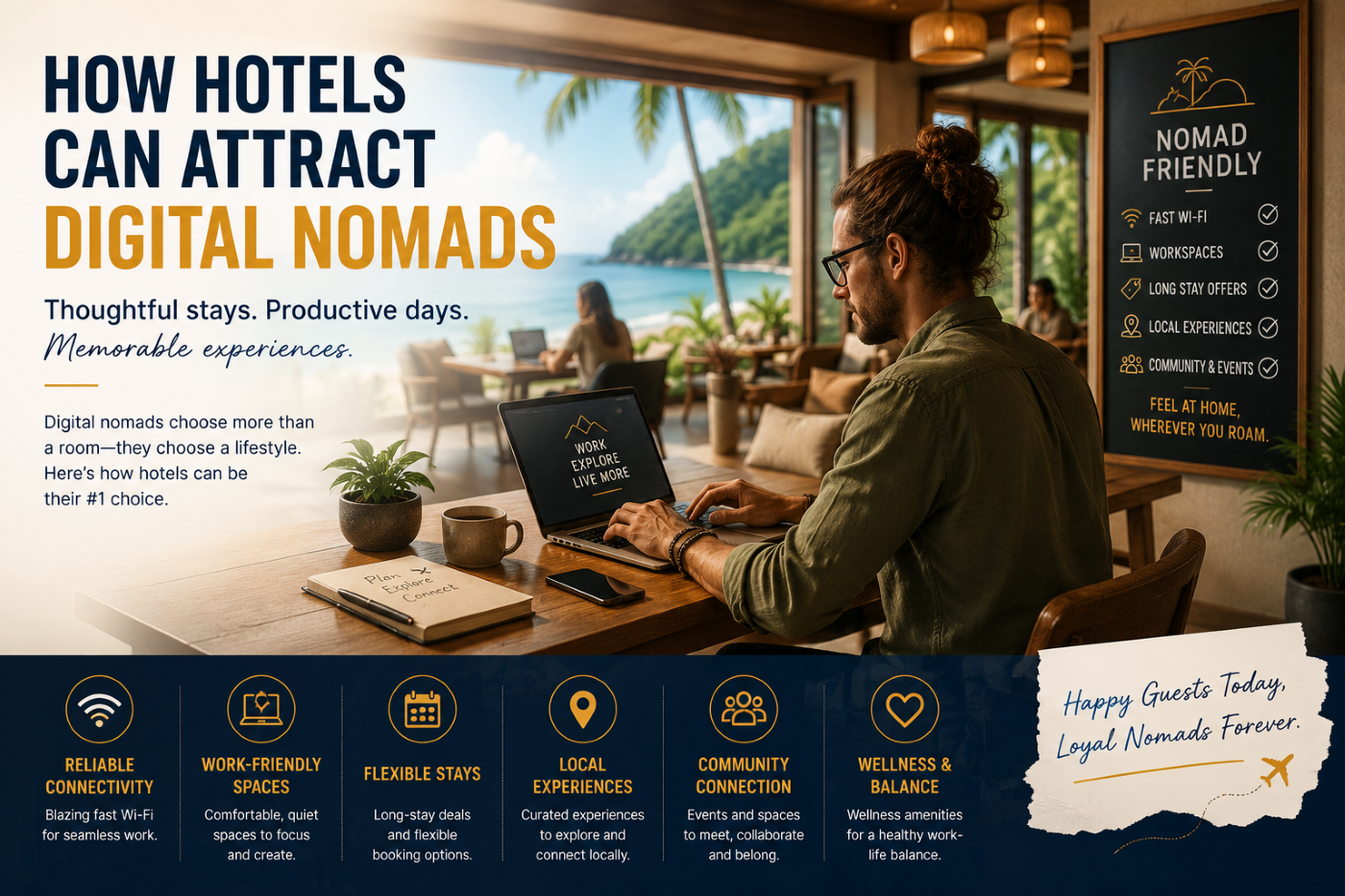
The rise of remote work has transformed the global travel landscape. Millions of professionals are no longer tied to traditional office environments and can work from virtually anywhere with a reliable internet connection. This shift has given rise to a rapidly growing segment known as digital nomads—individuals who combine work and travel while living temporarily in different destinations around the world.
For the hospitality industry, digital nomads represent a significant opportunity. Unlike traditional tourists who may stay for a few nights, digital nomads often book accommodations for weeks or even months. They seek comfortable environments that support both productivity and lifestyle experiences. Hotels that understand and cater to their unique needs can unlock new revenue streams, increase occupancy during off-peak seasons, and build long-term guest relationships.
For BookSmart, attracting digital nomads is about creating flexible, work-friendly experiences that meet the expectations of today’s location-independent professionals.
Understanding the Digital Nomad Market
Digital nomads are professionals who work remotely while traveling.
They may include:
- freelancers
- entrepreneurs
- consultants
- software developers
- content creators
- marketers
- designers
- remote employees
Unlike traditional travelers, digital nomads view accommodation as both a living space and a workplace.
Their decision-making process often prioritizes functionality, connectivity, and community over traditional tourism amenities.
Why Digital Nomads Matter to Hotels
The digital nomad market continues to expand as remote work becomes more common.
Hotels benefit from attracting digital nomads because they often:
- stay longer than leisure travelers
- book during off-peak periods
- spend on additional services
- return to destinations they enjoy
- recommend properties within remote work communities
Longer stays can improve occupancy rates while reducing the operational costs associated with frequent guest turnover.
For BookSmart, digital nomads represent a valuable and growing customer segment.
Reliable High-Speed Internet Is Essential
If there is one non-negotiable requirement for digital nomads, it is dependable internet access.
Remote professionals rely on internet connectivity for:
- video conferencing
- cloud-based work
- file sharing
- communication
- collaboration tools
Hotels should provide:
- high-speed Wi-Fi
- strong coverage throughout the property
- backup internet solutions
- dedicated work-friendly connectivity options
Poor internet performance can quickly discourage digital nomads from booking or returning.
Create Dedicated Workspaces
Many digital nomads prefer environments specifically designed for productivity.
Hotels can attract remote workers by offering:
- co-working spaces
- business lounges
- quiet work areas
- private meeting rooms
- ergonomic seating
A dedicated workspace allows guests to separate work from leisure and improves overall satisfaction.
For BookSmart, blending hospitality and productivity is becoming increasingly important.
Offer Flexible Long-Stay Packages
Traditional nightly rates may not appeal to digital nomads planning extended stays.
Hotels can introduce:
- weekly packages
- monthly rates
- remote work memberships
- long-stay discounts
Flexible pricing encourages longer bookings and improves occupancy stability.
These packages should include benefits that align with remote work lifestyles.
Provide Comfortable In-Room Work Setups
Many remote professionals prefer working from their rooms.
Hotels can enhance room functionality by providing:
- comfortable desks
- ergonomic chairs
- multiple power outlets
- excellent lighting
- high-speed Wi-Fi access
A productive in-room environment can become a major competitive advantage.
Build a Community Experience
One challenge many digital nomads face is social isolation.
Hotels can create community-focused experiences through:
- networking events
- workshops
- social gatherings
- local meetups
- collaborative work sessions
These activities help guests connect with like-minded professionals.
Community-building often becomes a strong differentiator.
Promote Local Experiences
Digital nomads often seek authentic experiences beyond work.
Hotels can curate:
- cultural tours
- local workshops
- culinary experiences
- adventure activities
- community events
For example, digital nomads staying in Jaipur may enjoy heritage walks and cultural experiences, while those in Goa may seek beachside activities and wellness retreats.
Combining work and lifestyle experiences enhances guest satisfaction.
Focus on Wellness and Work-Life Balance
Remote professionals increasingly prioritize wellness.
Hotels can appeal to digital nomads by offering:
- fitness centers
- yoga sessions
- meditation spaces
- wellness programs
- healthy dining options
Supporting work-life balance strengthens the overall guest experience.
Wellness-focused amenities are becoming highly attractive to remote workers.
Optimize Mobile and Direct Booking Experiences
Digital nomads are highly digital-savvy travelers.
Hotels should ensure:
- mobile-friendly websites
- seamless booking systems
- easy online communication
- digital check-in options
A frictionless digital experience improves conversion rates and guest satisfaction.
For BookSmart, technology-enabled convenience is essential for attracting modern travelers.
Offer Business-Friendly Amenities
Remote professionals often need services that support their work activities.
Hotels can provide:
- printing services
- meeting rooms
- conference facilities
- mail handling
- office support
These amenities add practical value and improve guest productivity.
Leverage Social Media Marketing
Digital nomads frequently discover destinations and accommodations through social media.
Hotels should showcase:
- workspaces
- internet capabilities
- community events
- local experiences
- long-stay options
Platforms such as Instagram, LinkedIn, and YouTube can help reach remote work audiences effectively.
Authentic content often resonates strongly with digital nomad communities.
Emphasize Location Advantages
Digital nomads often evaluate destinations based on:
- internet infrastructure
- cost of living
- safety
- transportation access
- lifestyle opportunities
Hotels should highlight nearby:
- cafés
- co-working spaces
- public transportation
- recreational attractions
- local communities
Location positioning can significantly influence booking decisions.
Sustainability Appeals to Modern Travelers
Many digital nomads value responsible travel and sustainability.
Hotels can strengthen appeal through:
- eco-friendly operations
- local sourcing
- waste reduction programs
- sustainable tourism initiatives
Sustainability contributes positively to brand image and guest perception.
Challenges Hotels May Face
While attracting digital nomads offers opportunities, hotels may encounter challenges such as:
- adapting traditional hospitality models
- balancing business and leisure guest needs
- investing in infrastructure upgrades
- maintaining community engagement
Successful execution requires thoughtful planning and ongoing innovation.
Future of Digital Nomad Hospitality
The digital nomad movement is expected to continue growing.
Emerging trends include:
- workation packages
- hybrid hospitality models
- integrated co-living and co-working spaces
- AI-driven personalization
- remote work communities
Hotels that adapt early will be better positioned to capture this expanding market.
Conclusion
Digital nomads are reshaping the hospitality industry by creating demand for accommodations that support both work and travel. Their preferences extend beyond comfortable rooms to include connectivity, flexibility, community, wellness, and authentic local experiences.
For BookSmart, the key takeaway is clear: attracting digital nomads requires more than offering Wi-Fi—it requires creating an environment where productivity and lifestyle seamlessly coexist.
Hotels that invest in work-friendly amenities, community-building initiatives, and personalized experiences will strengthen occupancy, increase guest loyalty, and thrive in the evolving future of travel.
Leave a Reply