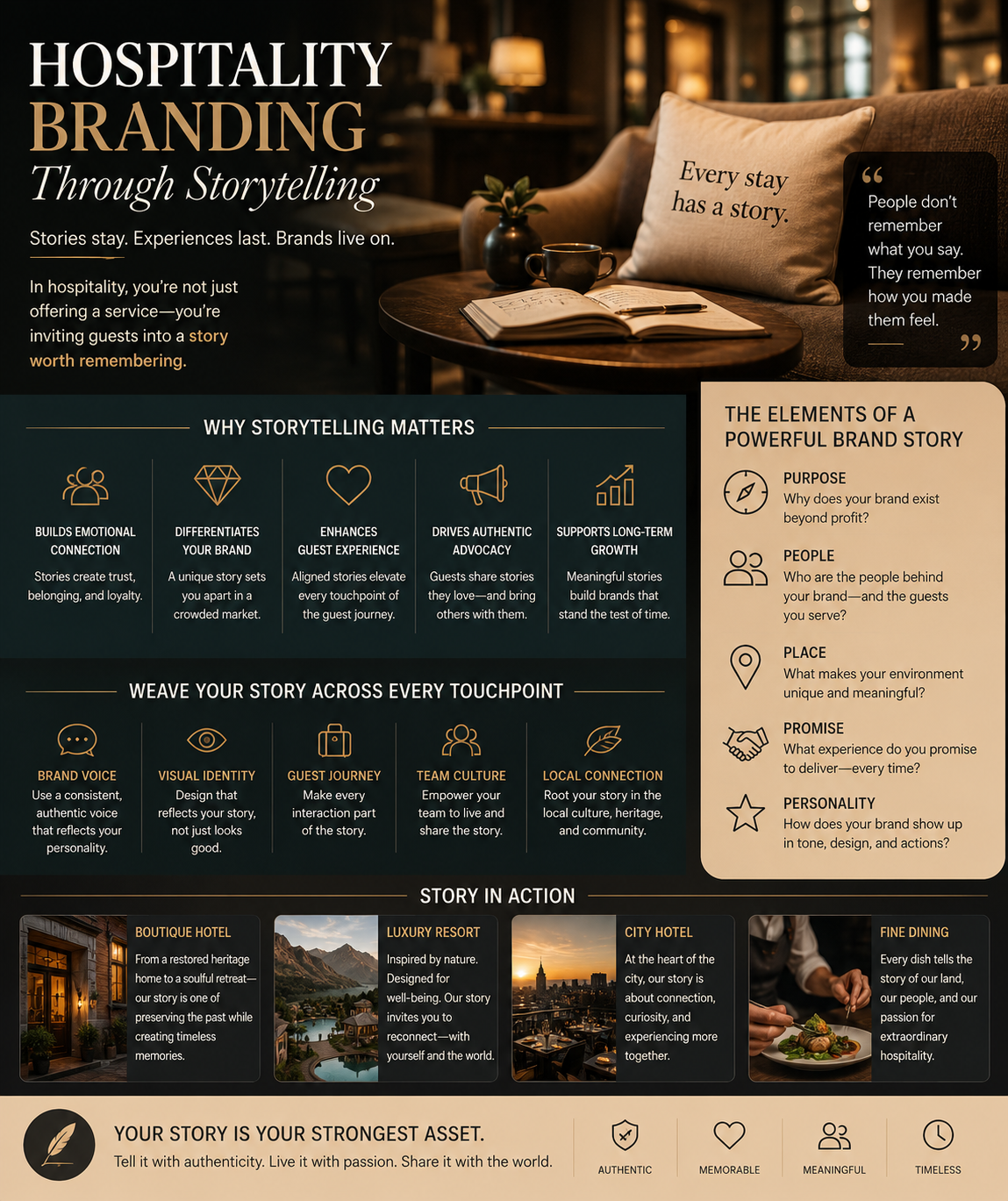
In today’s hospitality landscape, travelers are surrounded by endless choices. Hotels compete not only on pricing, amenities, location, or luxury but also on emotional connection. Guests increasingly seek brands that feel authentic, memorable, and meaningful. This shift has made storytelling one of the most powerful branding tools in hospitality.
A hotel is no longer simply a place to stay. It represents an experience, a personality, and often a deeper emotional narrative. Storytelling helps hospitality brands move beyond transactions and create stronger connections with guests by communicating values, identity, and purpose.
For BookSmart, storytelling is not just a marketing technique—it is a strategic approach to creating memorable brand experiences that guests remember long after checkout.
What Is Storytelling in Hospitality Branding?
Storytelling in hospitality branding involves using narratives to communicate a hotel’s identity, values, culture, and guest experiences.
Instead of focusing only on features such as room size or amenities, storytelling answers deeper questions:
- What does the hotel represent?
- What emotions does it create?
- What makes it unique?
- Why should guests care?
Stories create context and emotional meaning around a brand.
A memorable story often influences guests more than a list of facilities.
Why Storytelling Matters in Hospitality
Travel decisions are often emotional rather than purely rational.
Guests may compare:
- prices
- room types
- locations
- services
But emotional factors often determine final choices.
Storytelling helps hotels:
- create emotional connections
- strengthen brand identity
- increase memorability
- improve guest loyalty
- differentiate from competitors
For BookSmart, storytelling transforms hospitality brands from service providers into meaningful experiences.
Travelers Remember Stories More Than Features
Guests often forget specifications but remember feelings.
Few travelers remember exact room dimensions or booking details years later.
However, they frequently remember:
- a meaningful interaction
- a unique cultural experience
- a memorable moment
- a story connected to the property
Stories create emotional memory.
This emotional impact influences repeat visits and recommendations.
Building Brand Identity Through Narrative
Every hotel has a story.
Examples may include:
- local heritage
- architectural history
- founder vision
- cultural inspiration
- sustainability mission
For example, a heritage hotel in Udaipur can build narratives around royal traditions, local culture, and historical experiences.
Storytelling gives properties personality and depth.
Authenticity Is Essential
Modern travelers value authenticity.
Stories should reflect genuine experiences and values rather than marketing exaggeration.
Authentic storytelling may involve:
- real employee stories
- local community connections
- guest experiences
- regional culture
Authenticity builds trust.
Guests increasingly recognize and appreciate brands with honest narratives.
Using Local Culture as a Storytelling Asset
Destinations themselves provide rich storytelling opportunities.
Hotels can integrate:
- local traditions
- regional cuisine
- folklore
- architecture
- community experiences
For example, a hotel in Jaipur can incorporate stories around local craftsmanship, heritage, and cultural experiences.
This creates immersive and destination-driven branding.
Employee Stories Humanize Brands
Hospitality is fundamentally people-centered.
Employees often represent a hotel’s most powerful storytellers.
Sharing stories about:
- staff journeys
- service moments
- community involvement
- behind-the-scenes experiences
helps humanize the brand.
People connect strongly with human stories.
For BookSmart, employee storytelling creates authenticity and emotional depth.
Guest Stories Create Social Proof
Guests themselves generate powerful brand narratives.
Hotels can encourage storytelling through:
- testimonials
- social media content
- video experiences
- user-generated photos
- travel stories
A guest describing a memorable stay often feels more trustworthy than traditional advertising.
Guest stories strengthen credibility and engagement.
Digital Channels Amplify Storytelling
Modern storytelling increasingly happens across digital platforms.
Hotels use:
- websites
- blogs
- videos
- email campaigns
- social media platforms
Platforms such as Instagram and YouTube allow hospitality brands to share immersive visual narratives.
Short videos and visual storytelling often generate stronger engagement.
Storytelling Through Design and Experience
Brand stories should extend beyond marketing.
Hotels can express stories through:
- interior design
- architecture
- music
- menus
- sensory experiences
Every guest interaction becomes part of the narrative.
For example, design inspired by local culture creates stronger storytelling consistency.
Storytelling and Emotional Branding
Strong hospitality brands often focus on emotion rather than features.
Guests increasingly seek:
- belonging
- inspiration
- nostalgia
- adventure
- connection
Stories help hotels create emotional positioning.
Emotional branding strengthens loyalty and long-term relationships.
Measuring Storytelling Success
Hotels can evaluate storytelling effectiveness through:
- social media engagement
- website interaction metrics
- guest feedback
- repeat bookings
- brand awareness indicators
These metrics reveal how audiences respond to narratives.
Challenges of Hospitality Storytelling
Despite its benefits, storytelling requires careful execution.
Common challenges include:
- maintaining authenticity
- creating consistent messaging
- balancing narrative with marketing goals
- standing out in crowded digital spaces
Poor storytelling can feel forced or generic.
Consistency and authenticity remain critical.
Future of Storytelling in Hospitality
The future of hospitality storytelling is becoming increasingly immersive.
Emerging trends include:
- personalized storytelling experiences
- AI-generated content personalization
- virtual reality experiences
- interactive guest narratives
- community-driven storytelling
Hotels will increasingly create stories that guests actively participate in rather than simply consume.
Conclusion
Storytelling has become one of the most powerful branding tools in hospitality.
It transforms hotels from places to stay into experiences people remember and share.
For BookSmart, the key takeaway is clear: successful hospitality brands are built not only through services and amenities but through meaningful stories that create emotional connections.
Hotels that embrace authentic storytelling will strengthen brand identity, deepen guest relationships, and stand out in an increasingly competitive hospitality market.
Leave a Reply