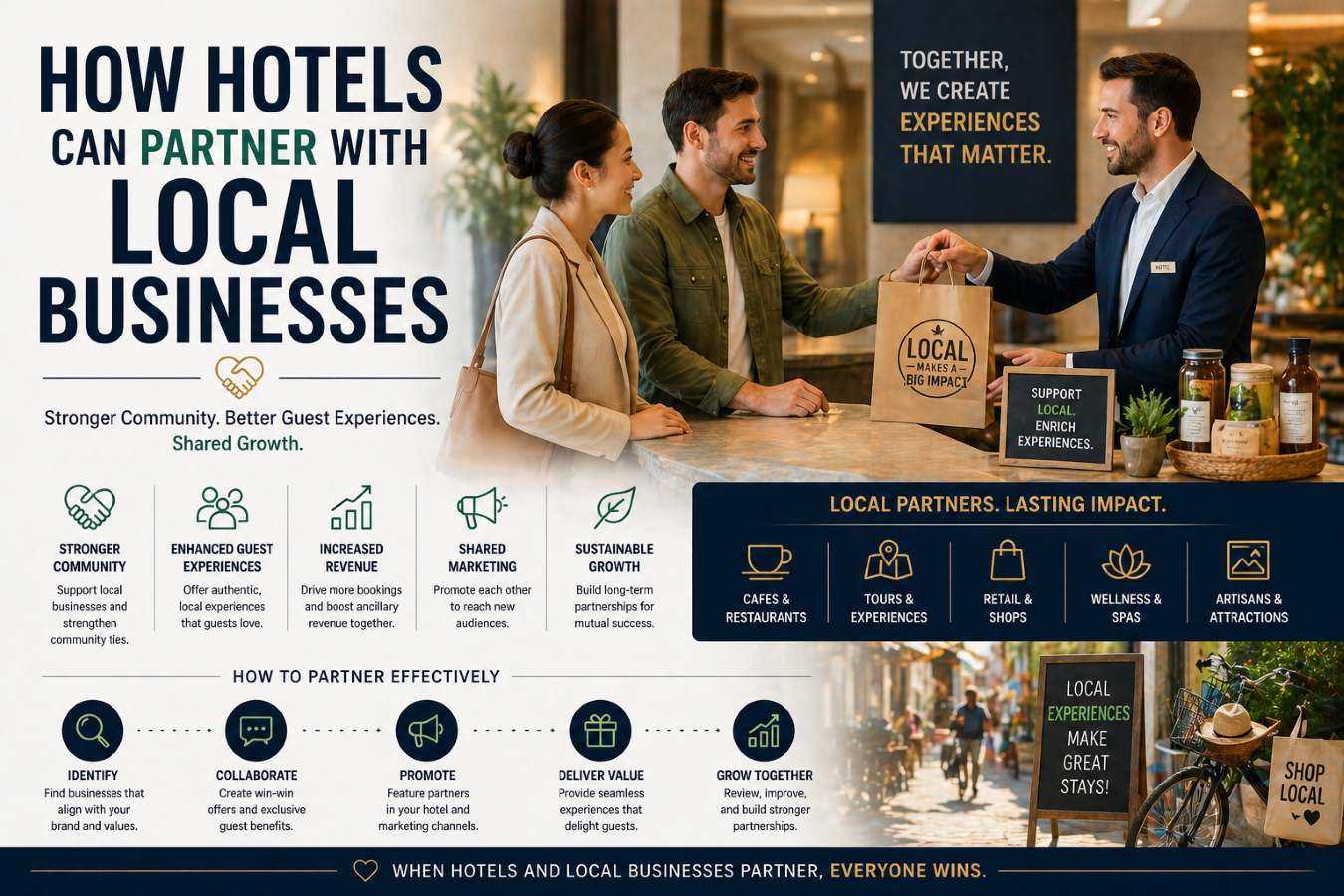
In today’s experience-driven hospitality landscape, hotels are no longer operating in isolation. Guests expect more than just a place to stay—they want access to authentic local experiences, convenience, and personalized services. This shift has created a powerful opportunity for hotels to collaborate with nearby businesses and build mutually beneficial partnerships.
For BookSmart, partnering with local businesses is not just a growth strategy—it’s a way to enhance guest experience, strengthen community ties, and unlock new revenue streams.
Why Local Partnerships Matter
Local partnerships allow hotels to extend their offerings beyond their physical property.
Instead of building everything in-house, hotels can collaborate with:
- restaurants
- tour operators
- transport providers
- wellness centers
- retail shops
- cultural organizations
These partnerships create a richer ecosystem around the guest experience while reducing operational costs.
For guests, it means convenience and curated experiences. For hotels, it means additional revenue and differentiation.
Enhancing Guest Experience
One of the biggest advantages of local partnerships is improved guest satisfaction.
For example:
- a hotel in Kolkata can partner with local sweet shops for authentic dessert experiences
- a resort in Goa can collaborate with water sports providers
- a property in Manali can offer trekking or adventure packages
These partnerships help guests explore the destination more deeply without the hassle of planning everything themselves.
Creating New Revenue Streams
Partnerships are also a strong source of additional income.
Hotels can earn through:
- commission-based referrals
- bundled packages
- co-branded experiences
- exclusive deals
For instance, a hotel can offer a “Stay + Dining” package in collaboration with a popular local restaurant, increasing the overall booking value.
This approach boosts both occupancy and average revenue per guest.
Strengthening Local Identity
Hotels that actively collaborate with local businesses become more connected to the destination.
Instead of offering generic experiences, they provide authentic, location-specific offerings.
For example, a heritage hotel in Jaipur can partner with artisans for craft workshops, while a property in Varanasi can collaborate with local guides for cultural tours.
This not only enhances guest experience but also strengthens the hotel’s brand identity.
Types of Local Partnerships
Hotels can explore different kinds of partnerships depending on their location and target audience.
Food & Beverage Partnerships
Tie-ups with local restaurants, cafes, and food vendors
Tour & Activity Providers
City tours, adventure sports, cultural experiences
Transport Services
Airport transfers, car rentals, local taxis
Wellness & Fitness
Spas, yoga studios, fitness centers
Retail & Souvenirs
Local handicrafts, boutique stores
Each partnership adds value to the guest journey.
Co-Marketing Opportunities
Partnerships also open doors for joint marketing efforts.
Hotels and local businesses can:
- promote each other on social media
- create joint campaigns
- offer cross-discounts
- feature each other on websites
For example, a hotel and a nearby restaurant can run a combined promotion targeting tourists.
This expands reach without increasing marketing costs.
Digital Integration of Partnerships
Technology makes it easier to integrate local services into the booking journey.
Hotels can:
- list partner services on their website
- offer add-ons during booking
- enable one-click experience booking
- use mobile apps for recommendations
This creates a seamless experience where guests can book everything in one place.
Platforms like Airbnb have already demonstrated how integrated experiences can drive engagement and revenue.
Training Staff for Effective Partnerships
Hotel staff play a key role in promoting local partnerships.
They should:
- understand partner offerings
- recommend relevant services
- provide accurate information
- assist with bookings
A well-informed front desk or concierge team can significantly increase uptake of partner services.
Building Strong Relationships
Successful partnerships require trust and collaboration.
Hotels should:
- choose reliable partners
- ensure quality standards
- maintain clear communication
- review performance regularly
Long-term relationships create consistency and better guest experiences.
Challenges to Consider
While partnerships offer many benefits, they also come with challenges.
Hotels must manage:
- service quality control
- brand alignment
- pricing transparency
- customer complaints related to partners
A poor partner experience can reflect negatively on the hotel, so careful selection is essential.
Supporting the Local Economy
Partnering with local businesses also contributes to community development.
It helps:
- support small businesses
- promote local culture
- create employment opportunities
- encourage sustainable tourism
This social impact strengthens the hotel’s reputation and aligns with responsible tourism practices.
Future of Local Partnerships
The future of hospitality lies in connected ecosystems.
Emerging trends include:
- AI-driven partner recommendations
- hyper-local experience marketplaces
- integrated booking systems
- sustainable and community-focused collaborations
Hotels that build strong local networks will have a competitive advantage.
Conclusion
Partnering with local businesses is one of the most effective ways for hotels to enhance guest experience, increase revenue, and build a strong brand identity.
It allows hotels to offer more value without heavy investment while supporting the local community.
For BookSmart, the key takeaway is clear: collaboration is the future of hospitality.
Hotels that embrace local partnerships will not only stand out in a competitive market but also create richer, more meaningful experiences that guests truly remember.
Leave a Reply