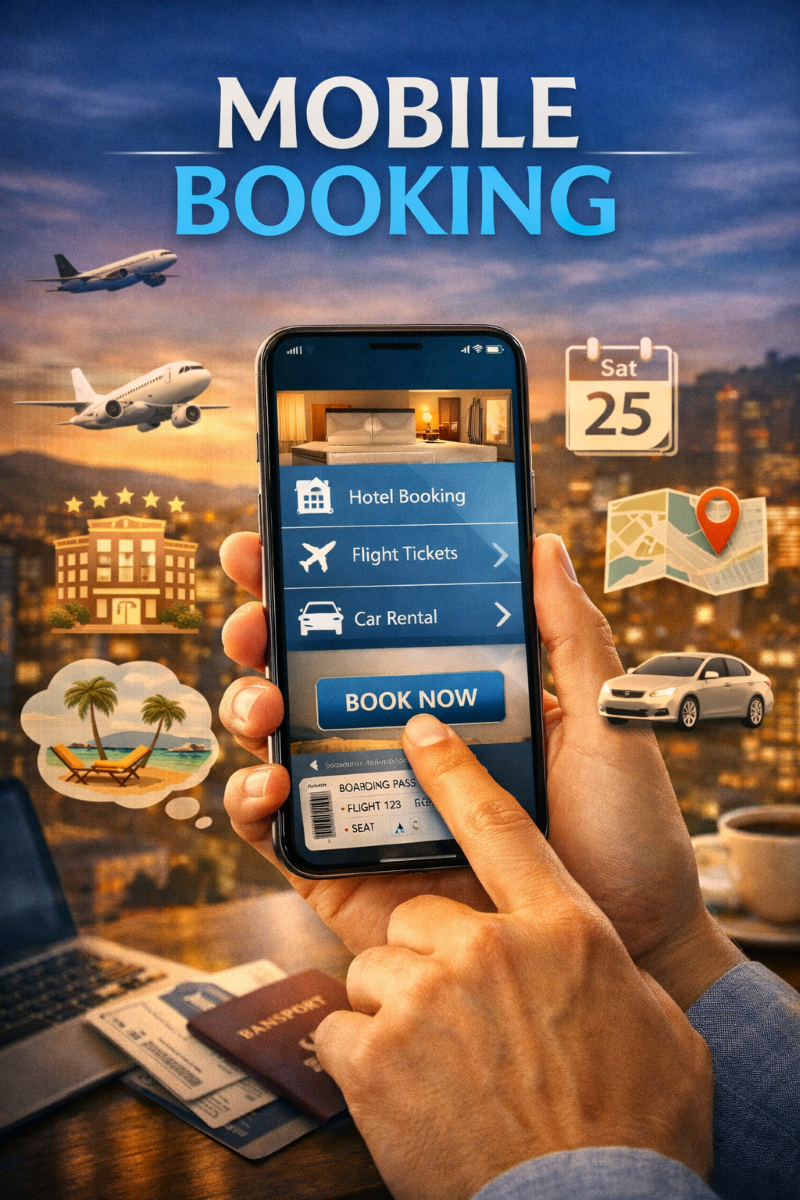
In today’s digital-first world, smartphones have become an essential part of everyday life, and the hospitality industry is evolving rapidly to meet this shift. From researching destinations to making instant reservations, travelers now prefer completing their entire booking journey through their mobile devices. This growing trend has made mobile booking one of the most important drivers of success in modern hospitality.
Mobile booking refers to the process of reserving hotel rooms, travel packages, or hospitality services through smartphones and tablets using mobile websites or dedicated applications. It offers convenience, speed, and flexibility, allowing guests to book anytime and from anywhere. Recent hospitality reports suggest that mobile bookings are now dominating both traffic and revenue, with some markets seeing over 60% of reservations coming directly from mobile devices.
What is Mobile Booking?
Mobile booking is the use of smartphones or tablets to make hotel reservations through a hotel’s website, booking engine, or mobile app.
Unlike traditional desktop booking, mobile booking focuses on fast, touch-friendly, and seamless user experiences. Guests can check room availability, compare prices, make secure payments, and receive instant confirmations within minutes.
This convenience has significantly changed how customers interact with hospitality brands.
Why Mobile Booking is Growing
The rise of mobile booking is closely linked to changing consumer behavior.
Modern travelers prefer quick decisions and instant access to services. Whether planning a vacation in advance or booking a last-minute stay, smartphones offer unmatched accessibility.
Recent industry data shows that mobile is no longer just a browsing channel—it is now becoming the primary revenue driver for hotel bookings, especially for last-minute reservations.
For BookSmart, this trend highlights the importance of mobile-first hospitality strategies.
Convenience and Accessibility
One of the biggest strengths of mobile booking is convenience.
Guests can make reservations:
- while commuting
- during office breaks
- at airports
- while traveling
- from home
This 24/7 accessibility makes the booking process highly flexible.
Unlike traditional methods, mobile booking removes the need for phone calls or desktop access.
A few taps are enough to secure a reservation.
Faster Booking Experience
Speed is a major factor in customer satisfaction.
Mobile booking systems are designed to reduce steps and simplify the reservation journey.
Features such as:
- saved guest profiles
- one-click payments
- autofill details
- instant confirmation
- digital wallet integration
make the process faster than ever.
This directly improves conversion rates.
Last-Minute Booking Advantage
Mobile booking has become especially powerful for last-minute travelers.
Many guests now book rooms within hours or a few days before arrival.
Industry trends indicate a significant rise in short lead-time bookings, largely driven by mobile usage.
This is particularly valuable for hotels looking to fill unsold inventory quickly.
Better User Experience Through Apps
Dedicated hotel apps take mobile booking to the next level.
A well-designed app offers:
- easy navigation
- personalized recommendations
- loyalty rewards
- push notifications
- secure payments
- digital check-in
Modern hospitality apps are increasingly becoming the center of the guest journey, from booking to check-out.
For BookSmart, investing in a user-friendly mobile app can strengthen customer loyalty.
Personalization and Smart Recommendations
Mobile booking platforms use customer data to personalize the booking journey.
For example, if a guest usually books premium rooms, the app can automatically suggest similar options.
AI-powered recommendations may include:
- room upgrades
- breakfast packages
- airport transfers
- spa services
This personalization improves both guest experience and hotel revenue.
Secure Mobile Payments
Trust is essential in digital bookings.
Modern mobile booking systems integrate secure payment options such as:
- credit cards
- debit cards
- UPI
- mobile wallets
- net banking
The widespread adoption of digital wallets has increased user confidence in completing high-value bookings on mobile devices.
This shift has significantly accelerated mobile conversion rates.
Contactless Guest Journey
Mobile booking also supports the growing trend of contactless hospitality.
Guests can now use their phones for:
- online booking
- digital check-in
- room access
- service requests
- mobile payments
This creates a smooth, low-friction experience that modern travelers increasingly expect.
Benefits for Hotels
For hotels, mobile booking offers multiple business advantages.
These include:
- higher direct bookings
- better customer engagement
- improved conversion rates
- stronger loyalty programs
- reduced dependency on OTAs
Hotels can also use mobile platforms for upselling and remarketing.
Push notifications about special offers or seasonal discounts can drive repeat bookings.
Challenges in Mobile Booking
Despite its advantages, mobile booking also comes with challenges.
Poor app design, slow loading speed, and complicated checkout processes can increase abandonment rates.
Industry discussions show that even small friction points on mobile can push guests toward OTAs.
Hotels must therefore prioritize:
- fast page speed
- simple navigation
- transparent pricing
- minimal booking steps
Future of Mobile Booking
The future of hospitality is clearly mobile-first.
Emerging innovations include:
- AI chat booking
- voice search reservations
- keyless entry
- smart itinerary integration
- predictive offers
As mobile technology continues to evolve, hotels that optimize their mobile booking journey will gain a major competitive advantage.
Conclusion
Mobile booking is redefining how travelers interact with hospitality brands.
It offers convenience, speed, personalization, and a seamless guest experience from booking to arrival.
For BookSmart, the key takeaway is simple: mobile booking is no longer an option—it is a necessity.
Hotels that embrace mobile-first strategies today will be better positioned to meet the expectations of tomorrow’s travelers and drive long-term growth in the hospitality industry.
Leave a Reply