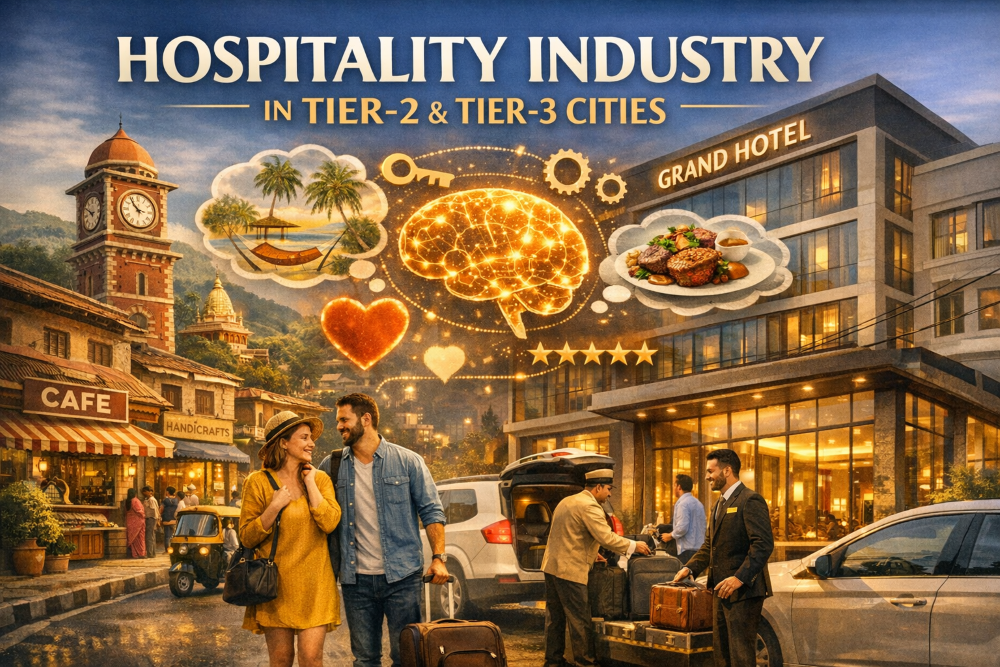
The hospitality industry in India is undergoing a remarkable transformation, and one of the most significant developments in recent years is the rapid growth of Tier-2 and Tier-3 cities. For decades, metropolitan hubs such as Delhi, Mumbai, Bengaluru, and Chennai dominated the hotel and tourism landscape. However, the narrative is changing. Smaller cities are now emerging as the next growth engines of the hospitality sector, driven by infrastructure development, rising disposable incomes, spiritual tourism, business travel, and changing consumer lifestyles.
Today, the future of hospitality is no longer limited to metro cities. Tier-2 and Tier-3 cities are becoming high-potential markets for hotels, resorts, boutique stays, and serviced accommodations. For BookSmart, this shift represents one of the most important trends shaping the Indian hospitality ecosystem.
India’s hotel boom is increasingly moving toward Tier-2 and Tier-3 markets, with nearly two-thirds of upcoming branded room additions expected in these cities.
The Rise of Emerging Cities
Tier-2 and Tier-3 cities include fast-growing urban centers such as Varanasi, Indore, Lucknow, Bhubaneswar, Siliguri, Nagpur, Ranchi, Dehradun, Surat, and many others. These cities are witnessing rapid economic development and urbanization.
Improved road networks, airport connectivity, railway modernization, and government-led smart city initiatives have significantly boosted travel accessibility. As connectivity improves, tourism and business travel naturally follow.
This growth is not accidental. It is driven by a broader economic decentralization where commercial activity, education hubs, healthcare centers, and industrial clusters are expanding beyond traditional metros.
Domestic Tourism as a Key Driver
One of the biggest reasons behind hospitality growth in smaller cities is the rise in domestic tourism.
Indian travelers are increasingly exploring destinations within the country, especially heritage towns, spiritual centers, hill stations, and culturally rich cities. Tier-2 and Tier-3 cities often serve as gateways to these experiences.
Religious tourism has become a major catalyst. Cities like Varanasi, Ayodhya, Ujjain, Puri, and Haridwar are experiencing substantial hotel investments due to increasing pilgrim footfall. For example, Varanasi has recently seen major hotel investments following tourism growth and infrastructure upgrades.
This segment supports demand across budget hotels, mid-scale chains, and premium hospitality brands.
Business and Corporate Expansion
It is not only tourism driving growth. Corporate and industrial expansion in smaller cities is creating a parallel demand for business hospitality.
Manufacturing zones, logistics hubs, IT parks, educational institutions, and startup ecosystems are expanding into Tier-2 cities. As a result, hotels catering to business travelers are seeing increased occupancy.
Cities such as Jaipur, Coimbatore, Kochi, Chandigarh, and Visakhapatnam have become important centers for corporate travel, conferences, and regional business meetings.
The MICE segment—Meetings, Incentives, Conferences, and Exhibitions—is also expanding in emerging cities, creating opportunities for upscale hotels and convention-friendly properties.
Rising Demand for Branded Hotels
Previously, unorganized local hotels dominated smaller cities. However, consumer expectations have evolved significantly.
Today’s travelers prefer standardized service, cleanliness, digital booking convenience, and trusted hospitality brands. This has encouraged major hotel chains to expand aggressively into Tier-2 and Tier-3 cities.
Recent reports indicate that Tier-3 cities are even outperforming in occupancy and ADR (Average Daily Rate) growth in some cases.
This shift is creating space for branded economy, midscale, and premium hotel chains.
For travelers, brand trust reduces uncertainty. For hotel companies, smaller cities offer lower land costs and faster market penetration.
Affordable Investment Opportunities
From an investor’s perspective, Tier-2 and Tier-3 cities offer compelling advantages.
Land acquisition and operational costs are generally lower compared to metro cities. This makes it easier for developers to achieve stronger returns on investment.
Construction costs, staffing expenses, and property taxes can also be more manageable, especially in emerging business districts.
Additionally, competition is often less saturated than in Tier-1 markets, giving new entrants an opportunity to establish early market leadership.
This is why hospitality investments are increasingly shifting beyond metro regions.
The Role of Technology
Technology is playing a crucial role in enabling hospitality growth in smaller cities.
Online travel platforms, mobile booking apps, digital payments, AI-powered customer support, and reputation management tools have made it easier for hotels in smaller towns to compete with urban properties.
Guests can now discover, compare, and book stays in remote destinations with ease.
Digital check-ins, cloud-based property management systems, and revenue optimization tools are helping hotels improve efficiency and guest experience.
This digital transformation is especially important for independent hotels seeking visibility.
Challenges in Tier-2 and Tier-3 Markets
Despite strong growth potential, the hospitality industry in these cities also faces certain challenges.
Skilled workforce availability remains a major issue. Recruiting trained staff in front office, food and beverage, housekeeping, and hotel management can be difficult.
Infrastructure gaps still exist in some cities, particularly in terms of last-mile connectivity, urban transport, and tourism support services.
Seasonality can also affect demand, especially in pilgrimage and leisure destinations.
Hotels must therefore balance cost optimization with service quality to sustain long-term profitability.
Changing Consumer Expectations
Guests in smaller cities are becoming more quality-conscious.
They now expect modern interiors, hygienic spaces, high-speed internet, personalized service, and seamless digital experiences.
Even budget travelers seek comfort, convenience, and trustworthy reviews before booking.
This shift is pushing hotel owners to upgrade properties, adopt better branding strategies, and improve service delivery standards.
The hospitality industry in Tier-2 and Tier-3 cities is no longer about basic accommodation—it is increasingly about experience-driven stays.
Future Outlook
The future of hospitality in emerging cities looks extremely promising.
As domestic travel continues to grow and infrastructure investments expand, these markets are expected to become central to India’s hospitality growth story.
Industry reports suggest sustained demand growth is likely to outpace supply in the coming years, supporting healthy occupancies and room rates.
For hotel brands, developers, and travel-tech companies, Tier-2 and Tier-3 cities represent the next big opportunity.
Conclusion
The hospitality industry in Tier-2 and Tier-3 cities is redefining India’s travel and tourism landscape.
Driven by domestic tourism, business expansion, religious travel, and digital adoption, these cities are emerging as powerful hospitality destinations.
For BookSmart, the key takeaway is clear: the future of Indian hospitality lies beyond metros. Smaller cities are no longer secondary markets—they are becoming primary drivers of growth, investment, and innovation.
Hotels that recognize this shift early and adapt their branding, technology, and service models accordingly will be best positioned to thrive in the years ahead.
Leave a Reply