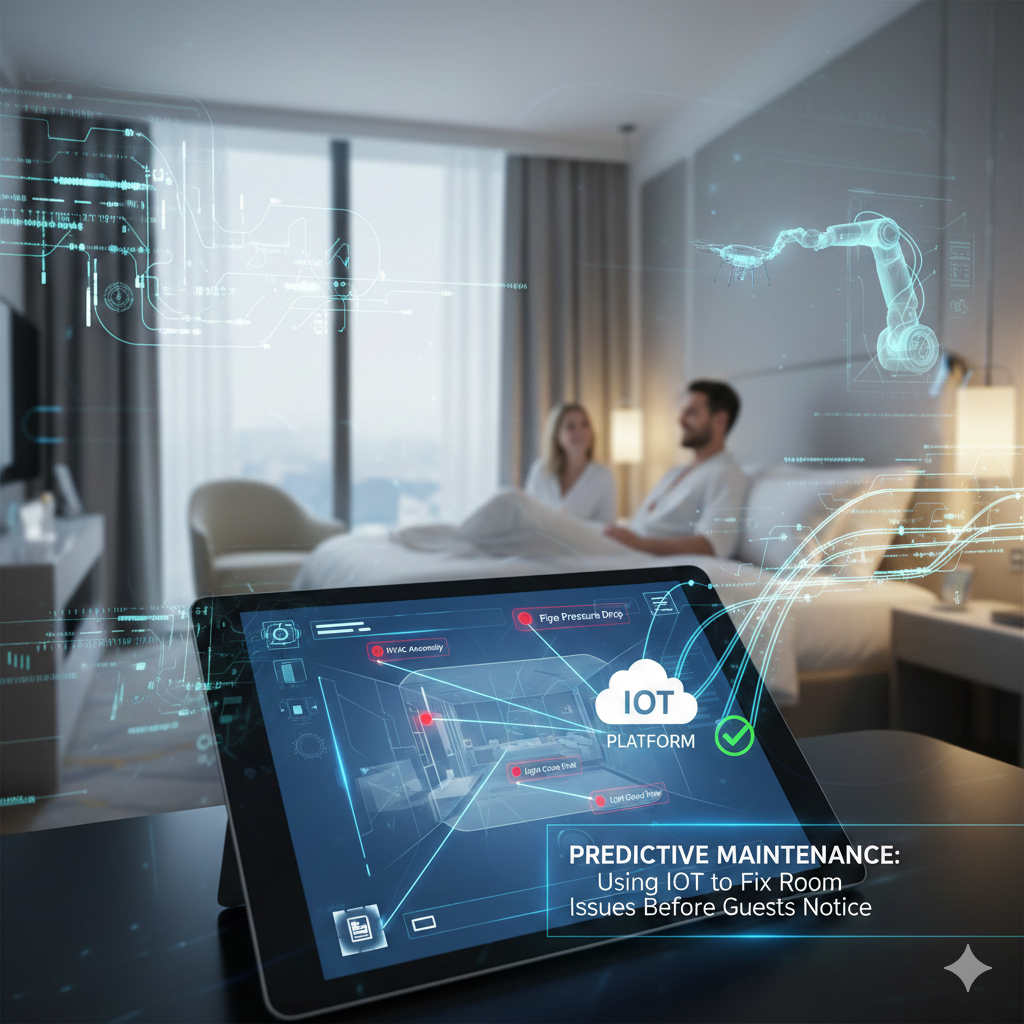
In hospitality, guest satisfaction is often shaped by the smallest details. A malfunctioning air conditioner, a flickering light, or weak water pressure can instantly turn a perfect stay into a disappointing one. What makes these situations worse is not just the problem itself—but the fact that guests discover it first.
Today, thanks to the Internet of Things (IoT), hotels are changing this dynamic. Instead of waiting for something to break, they are fixing problems before guests even notice them.
This approach is called predictive maintenance, and it is rapidly becoming one of the most powerful tools in modern hospitality.
At Booksmart, we see predictive maintenance as a silent revolution—one that improves guest experience, reduces costs, and protects brand reputation without guests ever realizing it’s happening.
What Is Predictive Maintenance?
Predictive maintenance is the use of IoT sensors, real-time data, and analytics to detect potential equipment problems before they fail.
Instead of reacting to complaints, hotels can act early.
It shifts maintenance from:
- Reactive → Fix after failure
to - Predictive → Fix before failure
This creates seamless guest experiences.
Guests never see the problem.
Because it never happens.
Understanding IoT in Hotel Rooms
The Internet of Things refers to physical devices connected to the internet that collect and share data.
In hotel rooms, IoT sensors can be installed in:
- Air conditioning systems
- Lighting systems
- Plumbing
- Elevators
- Water heaters
- Refrigerators
- Door locks
These sensors monitor performance continuously.
They detect changes, abnormalities, and warning signs.
This allows hotels to act early.
How Predictive Maintenance Works: Step by Step
Predictive maintenance follows a simple but powerful process.
Step 1: Sensors Collect Data
IoT sensors monitor:
- Temperature
- Humidity
- Equipment performance
- Energy consumption
- Vibration
- Pressure
These readings happen 24/7.
Step 2: Systems Analyze the Data
Software analyzes patterns.
It detects unusual behavior.
For example:
An air conditioner using more energy than normal may be developing a fault.
The system identifies this early.
Step 3: Alerts Are Sent to Maintenance Teams
Before failure happens, the system sends alerts.
Maintenance teams receive notifications.
They fix the issue proactively.
Step 4: Problem Is Fixed Before Guest Notices
The guest never experiences discomfort.
The experience remains smooth.
This is the power of predictive maintenance.
Why Traditional Maintenance Is No Longer Enough
Most hotels still rely on reactive maintenance.
This means:
- Guests report problems
- Maintenance responds
- Guests experience inconvenience
This creates negative impressions.
Even if the problem is fixed quickly.
The damage to guest satisfaction is already done.
Predictive maintenance eliminates this risk.
Common Hotel Room Problems Predictive Maintenance Prevents
Predictive maintenance can prevent many common guest complaints.
Air Conditioning Failure
Air conditioning is one of the most critical room features.
Sensors detect:
- Cooling inefficiency
- Motor problems
- Airflow issues
Fixes happen before breakdown.
Guests stay comfortable.
Lighting Issues
Sensors monitor lighting performance.
They detect:
- Flickering
- Power instability
- Bulb failure risk
Lights are replaced early.
Guests never see failure.
Plumbing Problems
Water systems are monitored for:
- Pressure changes
- Leak risk
- Temperature inconsistency
This prevents:
- No hot water complaints
- Leak damage
Elevator Breakdowns
Elevator sensors monitor:
- Motor health
- Movement patterns
Hotels fix elevators before breakdown.
This prevents guest frustration.
Impact on Guest Satisfaction and Reviews
Predictive maintenance directly improves guest satisfaction.
Guests experience:
- Fewer problems
- More comfort
- Better sleep
- Smooth stays
This leads to:
- Better online reviews
- Higher ratings
- More repeat bookings
Guests may never mention predictive maintenance.
But they feel its impact.
They describe the stay as “perfect” or “comfortable.”
Protecting Brand Reputation
In today’s digital world, one negative review can affect hundreds of future bookings.
Common review complaints include:
- “AC didn’t work”
- “No hot water”
- “Room maintenance was poor”
Predictive maintenance prevents these reviews.
This protects brand reputation.
It protects revenue.
Cost Savings for Hotels
Predictive maintenance also saves money.
Many people assume advanced technology is expensive.
But predictive maintenance reduces costs by preventing major failures.
Prevents Expensive Repairs
Fixing small problems early is cheaper.
Waiting for major breakdown is expensive.
Prevention saves money.
Extends Equipment Life
Equipment lasts longer when properly maintained.
Hotels avoid frequent replacements.
This reduces capital expenses.
Improves Energy Efficiency
Faulty equipment uses more energy.
IoT detects inefficiency.
Hotels fix it.
Energy costs decrease.
Improving Staff Efficiency
Maintenance teams work smarter.
Instead of reacting to emergencies, they follow planned repairs.
This reduces stress.
This improves productivity.
Staff can focus on prevention.
Not crisis management.
Real-World Adoption in Global Hospitality
Major hospitality brands are already using predictive maintenance.
Companies like Marriott International and Hilton are investing in smart room technology to improve guest experience and operational efficiency.
Technology providers such as Honeywell and Siemens offer IoT solutions specifically designed for hotels.
This shows predictive maintenance is not experimental.
It is the future.
Invisible Service: The Ultimate Luxury
The best service is invisible service.
When everything works perfectly, guests don’t think about maintenance.
They simply enjoy their stay.
Predictive maintenance enables this invisible perfection.
It creates effortless hospitality.
This defines modern luxury.
Competitive Advantage in the Hospitality Industry
Hotels compete heavily on:
- Reviews
- Ratings
- Guest experience
Predictive maintenance gives competitive advantage.
Hotels using it experience:
- Fewer complaints
- Higher ratings
- Better reputation
This leads to more bookings.
More revenue.
Integration with Smart Rooms
Predictive maintenance is part of the smart room ecosystem.
Smart rooms include:
- Smart thermostats
- Smart lighting
- Smart energy systems
All these systems generate data.
This data improves maintenance.
It improves guest experience.
Environmental Benefits
Predictive maintenance also supports sustainability.
Efficient equipment uses less energy.
Less energy reduces carbon footprint.
This supports eco-friendly hospitality goals.
Sustainability is increasingly important to modern travelers.
Challenges and Investment Considerations
Despite its benefits, predictive maintenance requires planning.
Challenges include:
Initial Investment
Sensors and systems require upfront cost.
But long-term savings justify investment.
Technology Integration
Hotels must integrate systems properly.
Poor integration reduces effectiveness.
Staff Training
Staff must understand the technology.
Training ensures success.
Future of Predictive Maintenance in Hospitality
Predictive maintenance will become standard.
Future advancements include:
- AI-powered maintenance predictions
- Fully automated repair scheduling
- Self-healing smart systems
Hotels will move closer to zero maintenance complaints.
Guests will experience flawless stays.
Why Guests Value Problem-Free Experiences More Than Luxury
Luxury is not just about expensive design.
Luxury is about comfort.
Comfort means:
- No problems
- No inconvenience
- No frustration
Predictive maintenance delivers this comfort.
This defines modern hospitality excellence.
The Booksmart Perspective
At Booksmart, we believe the future of hospitality lies in prevention, not reaction.
Guests should never discover problems.
Hotels should discover them first.
Predictive maintenance transforms maintenance from visible repair to invisible protection.
It protects guest experience.
It protects brand trust.
It protects business growth.
Conclusion
Predictive maintenance is redefining hospitality operations.
By using IoT sensors and real-time data, hotels can fix problems before guests notice them.
This improves:
- Guest satisfaction
- Online reviews
- Equipment lifespan
- Operational efficiency
Most importantly, it creates seamless experiences.
In the future, the best hotels won’t be the ones that fix problems fastest.
They will be the ones where problems never happen.
That is the power of predictive maintenance.
Leave a Reply