Category: Articles

  • Booking Platforms

    In today’s hospitality industry, booking platforms have become the primary bridge between hotels and travelers. Whether someone is planning a business trip, a family vacation, or a last-minute stay, the first interaction often begins on a digital platform. From hotel websites and mobile apps to global online travel agencies (OTAs), booking platforms now shape how guests discover, compare, and reserve accommodations.

    For hotels, these platforms are no longer just sales channels—they are essential tools for visibility, conversion, revenue management, and guest engagement. For BookSmart, understanding booking platforms is crucial to building a smarter hospitality strategy.

    What Are Booking Platforms?

    Booking platforms are digital systems that allow travelers to search, compare, and reserve hotel rooms online.

    These may include:

    • hotel direct websites
    • mobile booking apps
    • OTA platforms
    • meta-search travel sites
    • corporate booking portals
    • channel management systems

    They help users check room availability, compare prices, view guest reviews, and complete secure payments in real time.

    In simple terms, booking platforms make the hotel reservation process fast, transparent, and convenient.

    Types of Booking Platforms

    The hospitality industry uses several types of booking platforms.

    1. Direct Hotel Booking Platforms

    These are the hotel’s own digital channels, such as its official website or mobile app.

    This is where direct bookings happen.

    Benefits include:

    • zero OTA commission
    • stronger brand control
    • direct customer relationship
    • personalized offers
    • loyalty integration

    Industry reports show that direct booking is growing as hotels focus more on ownership of guest data and margins.

    2. Online Travel Agencies (OTAs)

    OTAs are third-party platforms that aggregate hotel listings from multiple brands.

    Common examples include:

    • Booking.com
    • Expedia
    • MakeMyTrip
    • Goibibo
    • Airbnb

    These platforms offer massive visibility and simplified price comparison.

    For many travelers, OTAs are the starting point of their hotel search journey. Recent travel data indicates a significant share of users now begin hotel discovery directly on OTAs.

    3. Meta-Search Platforms

    Meta-search platforms do not always process the booking themselves. Instead, they compare prices across multiple booking platforms.

    Examples include:

    • Google Hotels
    • Tripadvisor
    • Trivago

    These platforms help users find the best available rates.

    Why Booking Platforms Matter

    Booking platforms are central to hotel revenue.

    They help properties:

    • increase room occupancy
    • expand digital reach
    • manage inventory
    • improve customer acquisition
    • enable instant booking

    The global online booking market continues to grow strongly, driven by mobile adoption and digital-first travel behavior.

    For BookSmart, booking platforms represent both visibility and conversion opportunities.

    Key Features of Modern Booking Platforms

    Modern platforms offer much more than room search.

    Key features include:

    • real-time availability
    • dynamic pricing
    • secure payment gateways
    • guest reviews
    • cancellation flexibility
    • AI recommendations
    • loyalty rewards
    • mobile-first UX

    These features help improve both booking conversion and customer trust.

    Mobile-First Booking Platforms

    Mobile booking is now one of the biggest drivers of hospitality growth.

    Travelers increasingly use smartphones for:

    • hotel search
    • price comparison
    • last-minute bookings
    • mobile payments

    This is why leading booking platforms are designed mobile-first.

    Market reports continue to show smartphone-led growth in accommodation booking.

    Benefits for Hotels

    Hotels benefit from booking platforms in multiple ways.

    Higher Visibility
    Hotels reach wider audiences.

    Better Occupancy
    More channels mean more reservation opportunities.

    Automation
    Inventory and rates update instantly.

    Revenue Optimization
    Dynamic pricing tools maximize room yield.

    Guest Insights
    Platforms collect valuable booking data.

    This data can be used for future remarketing and personalization.

    Challenges with Booking Platforms

    Despite the benefits, there are challenges.

    High OTA Commissions
    Third-party platforms often charge commissions.

    Price Competition
    Users compare rates instantly.

    Brand Dilution
    Hotels compete alongside multiple alternatives.

    Customer Ownership
    OTAs may retain customer relationship control.

    This is why many hotels aim to balance OTA presence with strong direct booking strategies.

    Role of AI and Automation

    AI is rapidly reshaping booking platforms.

    Recent industry developments show AI is being used for:

    • smart pricing
    • personalized offers
    • customer service chatbots
    • demand forecasting
    • fraud prevention

    This makes booking journeys faster and more intelligent.

    Future of Booking Platforms

    The future of booking platforms is moving toward:

    • AI-driven personalization
    • one-click booking
    • voice search
    • predictive offers
    • contactless guest journeys
    • loyalty ecosystem integration

    Hotels that embrace smarter digital platforms will have a major competitive advantage.

    Conclusion

    Booking platforms are now the digital backbone of the hospitality industry.

    They influence how guests discover, compare, trust, and finally reserve a stay.

    For BookSmart, the key takeaway is clear: booking platforms are not just technology tools—they are strategic growth engines that directly impact occupancy, revenue, and guest experience.

    In today’s hospitality market, the right booking platform can turn visibility into profitability.

  • Booking Conversion

    In the hospitality industry, generating traffic to your website or booking platform is only the first step. The real success lies in transforming that traffic into actual reservations. This is where booking conversion becomes one of the most important performance metrics for hotels, resorts, and hospitality brands.

    Booking conversion refers to the percentage of website visitors or app users who complete a reservation after visiting a booking page. In simple terms, it measures how effectively your platform turns potential guests into confirmed bookings.

    For BookSmart, booking conversion is not just a metric—it is a direct indicator of revenue performance, user experience quality, and customer trust.

    What is Booking Conversion?

    Booking conversion is the rate at which visitors complete a booking action.

    The formula is:

    Booking Conversion Rate = (Total Confirmed Bookings ÷ Total Website Visitors) × 100

    For example, if 1,000 people visit your hotel website and 50 complete a reservation, your booking conversion rate is 5%.

    This percentage helps hotels evaluate the effectiveness of their website, booking engine, and digital marketing efforts.

    Why Booking Conversion Matters

    A high number of visitors does not always mean high revenue.

    If guests visit your site but leave without booking, it signals a conversion problem.

    Low booking conversion can lead to:

    • lost revenue
    • higher customer acquisition cost
    • increased OTA dependency
    • poor return on marketing spend

    Improving conversion directly increases profitability without necessarily increasing traffic.

    This makes it one of the most cost-effective growth strategies.

    Key Factors Affecting Booking Conversion

    Several factors influence booking conversion in hospitality.

    1. Website Speed

    Slow-loading websites are one of the biggest conversion killers.

    Guests expect fast access to room availability, pricing, and booking forms.

    Even a delay of a few seconds can increase abandonment rates significantly.

    Fast-loading pages improve trust and reduce bounce rates.

    2. Mobile Optimization

    Most modern travelers now browse and book through smartphones.

    If your website is not mobile-friendly, conversion rates can drop sharply.

    Important mobile UX elements include:

    • large buttons
    • fast checkout
    • touch-friendly date selectors
    • autofill guest details
    • mobile payments

    For BookSmart, mobile-first booking design is essential for higher conversion.

    3. Transparent Pricing

    Hidden costs are one of the top reasons users abandon bookings.

    Guests want full pricing clarity from the start.

    This includes:

    • room price
    • taxes
    • service fees
    • cancellation charges

    Transparent pricing builds trust and reduces last-minute exits.

    4. Strong Call-to-Action

    The booking button must be highly visible and action-driven.

    Examples include:

    • Book Now
    • Reserve Your Stay
    • Check Availability

    Clear CTAs guide users toward the next step.

    Weak or hidden CTAs reduce conversion potential.

    5. High-Quality Visuals

    Travel is an emotional purchase.

    Guests want to visualize their experience before booking.

    Professional room images, lobby views, amenities, and location highlights increase confidence and interest.

    Better visuals often lead to higher booking intent.

    6. Trust Signals

    Booking involves financial commitment.

    Guests need reassurance before entering payment details.

    Trust signals include:

    • secure payment badges
    • guest reviews
    • star ratings
    • best price guarantee
    • flexible cancellation

    These elements reduce hesitation and improve conversion.

    Common Reasons for Low Booking Conversion

    Some of the most common reasons include:

    • slow website performance
    • complicated booking forms
    • forced account creation
    • confusing navigation
    • hidden fees
    • payment failures
    • poor mobile experience

    Each friction point increases drop-off rates.

    Booking Engine Optimization

    A strong booking engine is critical for higher conversions.

    The ideal booking flow should be:

    Search Dates → Select Room → Guest Details → Payment → Confirmation

    The fewer steps involved, the better the conversion rate.

    Long forms and repeated data entry should be avoided.

    Simple UX drives faster decision-making.

    Role of Personalization

    Personalization can significantly improve booking conversion.

    Smart systems can recommend:

    • preferred room types
    • special packages
    • breakfast add-ons
    • loyalty discounts
    • early check-in options

    When guests feel the offer is relevant to them, they are more likely to book.

    Retargeting for Better Conversion

    Not every visitor books on the first visit.

    Retargeting campaigns help bring users back.

    This includes:

    • abandoned cart emails
    • reminder notifications
    • retargeting ads
    • discount codes

    These strategies can recover lost conversions.

    Measuring Booking Conversion

    Hotels should continuously track:

    • website visits
    • room page views
    • checkout starts
    • payment completion
    • booking abandonment rate

    This data helps identify weak points in the funnel.

    For example, if many users reach checkout but do not pay, the issue may be related to payment UX or pricing transparency.

    Strategies to Improve Booking Conversion

    Some highly effective strategies include:

    1. Faster Loading Speed
    Optimize images and scripts.

    2. Simplified Forms
    Ask only necessary details.

    3. Better Mobile UX
    Focus on one-click flow.

    4. Direct Booking Offers
    Exclusive discounts improve conversion.

    5. Social Proof
    Use testimonials and ratings.

    6. Live Chat Support
    Instant answers reduce hesitation.

    Future of Booking Conversion

    The future of booking conversion is increasingly driven by AI and automation.

    Emerging trends include:

    • predictive pricing
    • AI chat assistants
    • personalized booking journeys
    • one-click rebooking
    • voice-enabled reservations

    These technologies will continue to improve direct booking rates.

    Conclusion

    Booking conversion is one of the most important success metrics in hospitality.

    It reflects how effectively a hotel converts digital traffic into revenue.

    For BookSmart, the key takeaway is clear: increasing booking conversion is not about attracting more visitors alone—it is about creating a faster, smarter, and more trustworthy booking experience.

    In today’s competitive hospitality market, better conversion means better growth.

  • Booking Funnel

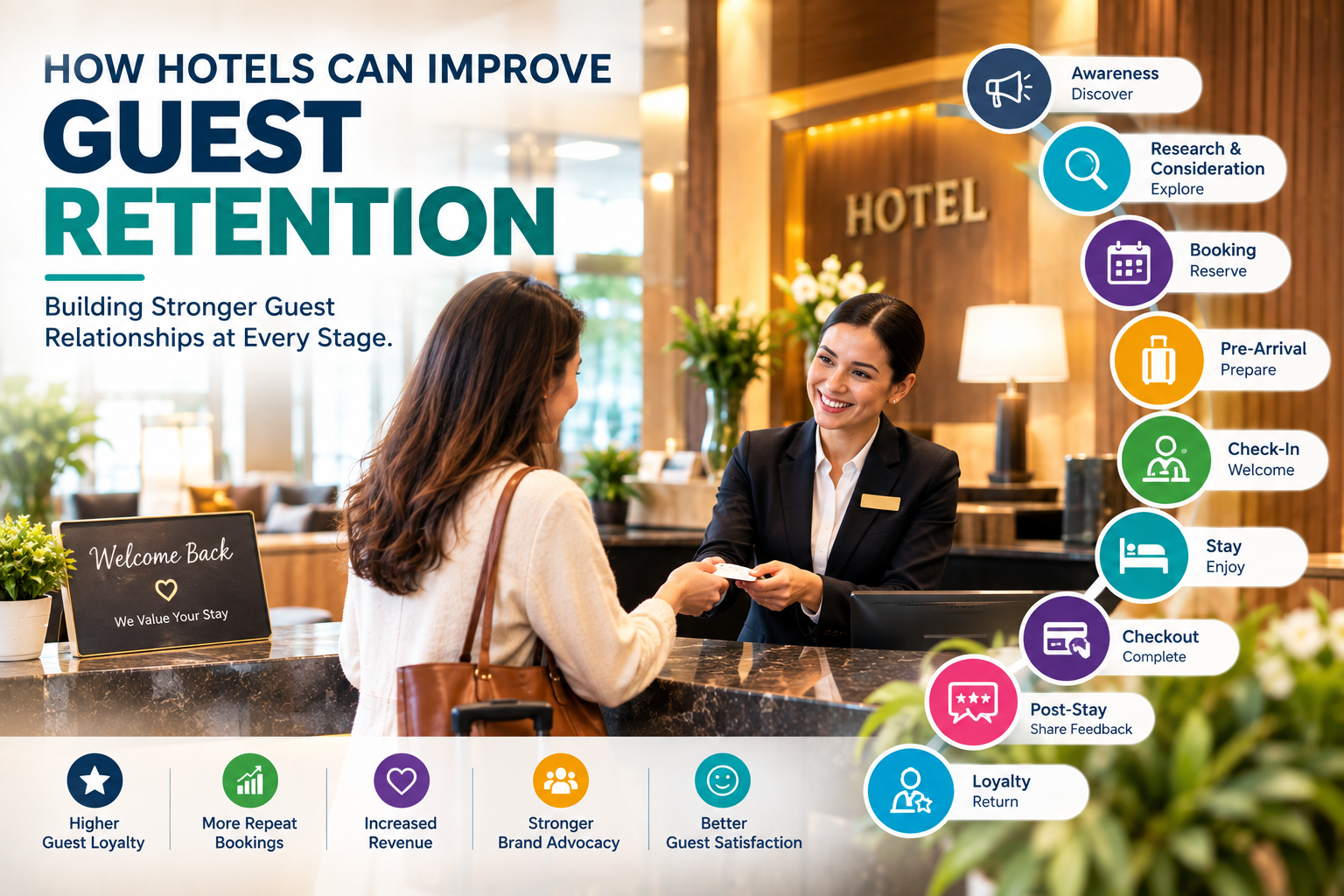
    In the hospitality industry, getting traffic to your website is only the beginning. The real challenge lies in converting that traffic into actual reservations. This is where the booking funnel becomes one of the most important concepts in hotel marketing and revenue growth.

    A booking funnel is the step-by-step journey a potential guest takes from discovering your hotel to completing a reservation. Much like a sales funnel, it starts with a large number of visitors and gradually narrows down to the users who finally book. Understanding this funnel helps hotels identify where potential guests drop off and how to improve conversions.

    For BookSmart, the booking funnel is not just a marketing concept—it is the backbone of smarter hotel sales and direct booking growth.

    What is a Booking Funnel?

    A booking funnel refers to the complete customer journey from the moment a traveler first becomes aware of a hotel to the moment they confirm their booking.

    Typically, the funnel includes the following stages:

    1. Awareness
    2. Interest
    3. Consideration
    4. Intent
    5. Booking / Conversion
    6. Retention / Repeat Booking

    At each stage, the number of users decreases, which is why it is called a funnel.

    The goal is to reduce drop-offs and maximize the number of completed bookings.

    Stage 1: Awareness

    This is the top of the funnel.

    At this stage, potential guests first discover your hotel through channels such as:

    • Google search
    • SEO blog articles
    • social media
    • travel ads
    • influencer content
    • OTA listings
    • word-of-mouth

    For example, someone searching for best hotels in Kolkata may come across your website or content.

    This stage is all about visibility and brand discovery.

    A strong digital presence ensures that your hotel enters the customer’s decision-making process.

    Stage 2: Interest

    Once a visitor lands on your website or app, the next step is building interest.

    This is where content, design, and first impressions matter.

    Guests start exploring:

    • room images
    • amenities
    • location
    • guest reviews
    • pricing
    • offers

    At this point, the user is not ready to book yet, but they are evaluating whether your property fits their needs.

    High-quality visuals, trust-building content, and clear information are crucial here.

    Stage 3: Consideration

    This is the stage where guests actively compare your hotel with competitors.

    They may compare:

    • room rates
    • cancellation policies
    • reviews
    • location advantages
    • direct booking offers

    This is one of the most critical points in the funnel.

    If your hotel website lacks clarity, transparent pricing, or trust signals, the user may leave and choose another option.

    For BookSmart, this stage is where brand trust and UX play a major role.

    Stage 4: Intent

    Intent means the guest is now seriously considering making a reservation.

    Typical signals include:

    • selecting dates
    • checking room availability
    • choosing room type
    • adding guest details

    This stage shows strong buying intent.

    However, many bookings are still lost here due to friction points such as:

    • hidden charges
    • slow loading pages
    • complicated forms
    • forced sign-ups
    • poor mobile UX

    This is where optimization becomes essential.

    Stage 5: Booking / Conversion

    This is the most important stage of the funnel.

    The user finally completes the payment and confirms the reservation.

    A smooth booking engine should make this process extremely simple.

    The ideal flow includes:

    Select Dates → Choose Room → Enter Details → Payment → Confirmation

    The fewer steps involved, the higher the conversion rate.

    For hotels, this is the stage where revenue is directly generated.

    Stage 6: Retention and Repeat Booking

    A smart booking funnel does not end after conversion.

    Post-booking engagement is equally important.

    Hotels should nurture guests through:

    • confirmation emails
    • check-in reminders
    • personalized offers
    • post-stay feedback
    • loyalty rewards

    This helps convert first-time guests into repeat customers.

    Repeat bookings are often more profitable than new customer acquisition.

    Why the Booking Funnel Matters

    Understanding the booking funnel helps hotels identify exactly where users are leaving.

    For example:

    • high traffic but low room page views = awareness issue
    • high room page views but low bookings = UX issue
    • checkout abandonment = payment friction

    Each drop-off point reveals a business opportunity.

    For BookSmart, funnel analysis helps improve direct bookings and reduce OTA dependency.

    Common Funnel Drop-Off Points

    Hotels commonly lose users at these stages:

    Awareness Drop-Off
    Poor SEO or weak digital presence

    Interest Drop-Off
    Unattractive website or poor images

    Consideration Drop-Off
    Higher visible prices than competitors

    Checkout Drop-Off
    Complicated forms or payment issues

    Identifying these points helps improve conversion rates.

    Booking Funnel Optimization Strategies

    Hotels can improve their booking funnel by focusing on:

    1. Faster Website Speed
    Slow sites cause major drop-offs.

    2. Mobile Optimization
    Most travelers now book through smartphones.

    3. Transparent Pricing
    Avoid surprise taxes or hidden charges.

    4. Better CTA Buttons
    Use strong buttons like Book Now or Check Availability.

    5. Retargeting Ads
    Bring back users who abandoned the funnel.

    6. Personalized Offers
    Discount codes, room upgrades, and loyalty perks improve conversion.

    Role of Data Analytics

    Analytics is essential for funnel optimization.

    Hotels can track:

    • page views
    • bounce rates
    • room selection rates
    • cart abandonment
    • payment success rate

    This data helps identify friction areas.

    A data-driven booking funnel strategy improves both occupancy and revenue.

    Future of Booking Funnels

    The future of booking funnels is becoming smarter with AI and automation.

    Emerging trends include:

    • predictive pricing
    • AI chat booking
    • personalized room recommendations
    • automated remarketing
    • one-click rebooking

    The funnel is moving from static design to intelligent customer journeys.

    Conclusion

    The booking funnel is one of the most important frameworks in hospitality marketing and direct sales.

    It helps hotels understand the guest journey from discovery to confirmation and optimize every step for better conversions.

    For BookSmart, the key takeaway is simple: every click in the booking journey matters.

    A well-optimized funnel not only increases bookings but also strengthens customer trust, improves user experience, and drives long-term growth.

    In today’s competitive hospitality market, mastering the booking funnel is essential for success.

  • Booking UX: The Key to Higher Hotel Conversions and Guest Satisfaction

    In the hospitality industry, attracting website visitors is only half the battle. The real success lies in converting those visitors into confirmed guests. This is where Booking UX (User Experience) plays a critical role. A well-designed booking experience can significantly improve direct reservations, reduce abandonment rates, and build trust with travelers from the very first click.

    Booking UX refers to the overall experience a user has while searching, selecting, and reserving a room on a hotel’s website or app. It includes everything from page speed and navigation to payment flow and confirmation screens. In simple terms, it is the journey that turns interest into action.

    Studies show that slow load times, unclear pricing, and complicated checkout processes are among the biggest reasons guests abandon hotel bookings online.

    What is Booking UX?

    Booking UX is the design and functionality of the reservation process from the user’s perspective.

    It covers:

    • search and availability flow
    • date and room selection
    • pricing visibility
    • checkout and payment
    • mobile responsiveness
    • confirmation and follow-up communication

    A strong UX ensures that guests can complete a reservation quickly and confidently without confusion.

    Why Booking UX Matters

    In hospitality, every extra click can lead to a lost booking.

    A traveler visiting a hotel website usually has high intent. They already know the destination and are often close to making a decision. However, if the booking process feels complicated, slow, or untrustworthy, they may leave and book through an OTA instead.

    Research and industry benchmarks indicate that mobile booking completion rates are often much lower than desktop, largely because of poor UX design.

    For BookSmart, this means that UX is directly linked to revenue.

    First Impression and Visual Clarity

    The first few seconds of the booking journey are extremely important.

    Users should immediately understand:

    • where to search
    • how to check availability
    • where to click next

    A clear “Book Now” or “Check Availability” button placed above the fold can improve conversions significantly. UX case studies consistently show that making the next step obvious reduces hesitation and improves funnel performance.

    The design should feel clean, premium, and trustworthy.

    Speed and Performance

    Speed is one of the biggest factors in booking UX.

    If pages load slowly, users lose patience quickly.

    Studies in hospitality UX show that pages taking more than 3 seconds to load can experience sharp increases in bounce and abandonment rates.

    This is especially critical on mobile devices, where most hotel traffic now originates.

    Fast-loading pages, optimized images, and lightweight booking engines directly improve conversion.

    Mobile-First Booking Experience

    Modern travelers increasingly book on their smartphones.

    This means booking UX must be designed mobile-first, not just mobile-friendly.

    A good mobile UX includes:

    • large tap buttons
    • easy date pickers
    • minimal typing
    • autofill support
    • sticky booking bar
    • thumb-friendly navigation

    Industry data suggests mobile accounts for the majority of hotel traffic, yet conversion rates often lag because of poor design decisions.

    Transparent Pricing

    One of the biggest reasons for booking abandonment is hidden fees.

    Guests want clarity.

    Room rate, taxes, service fees, and cancellation terms should be visible early in the process.

    When extra charges appear only at checkout, trust breaks immediately.

    Pricing transparency is now considered one of the most important conversion factors in hotel UX.

    For BookSmart, transparent pricing builds credibility and reduces last-step drop-offs.

    Frictionless Checkout Flow

    A complicated checkout flow is one of the fastest ways to lose a guest.

    The ideal booking journey should have as few steps as possible.

    For example:

    1. Select dates
    2. Choose room
    3. Enter guest details
    4. Payment
    5. Confirmation

    That’s it.

    Long forms, repeated data entry, and unnecessary account creation can increase abandonment.

    A visible progress indicator also helps users understand where they are in the journey.

    Trust Signals in Booking UX

    Booking is a decision based on trust.

    Guests need reassurance before entering payment details.

    Important trust elements include:

    • guest ratings
    • verified reviews
    • secure payment icons
    • cancellation policy
    • best price guarantee
    • customer support access

    Community discussions and hospitality case studies consistently highlight that trust signals inside the booking flow reduce hesitation.

    Personalization and Smart UX

    Modern booking UX is becoming more personalized.

    Smart systems can recommend:

    • preferred room types
    • previous stay options
    • special offers
    • breakfast add-ons
    • airport transfers

    AI-driven personalization improves both experience and upselling opportunities.

    This makes the booking process feel smarter and more guest-centric.

    Confirmation Experience

    UX does not end after payment.

    The confirmation page is equally important.

    Guests should immediately receive:

    • booking confirmation number
    • payment receipt
    • check-in instructions
    • hotel location details
    • cancellation policy

    A reassuring confirmation experience reduces anxiety and improves guest confidence.

    Future of Booking UX

    The future of booking UX is focused on simplicity, speed, and intelligence.

    Emerging trends include:

    • AI chat-based booking
    • voice reservations
    • one-click rebooking
    • predictive offers
    • contactless check-in

    The hospitality brands that win in the future will be those that make booking feel effortless.

    Conclusion

    Booking UX is one of the most powerful drivers of direct hotel revenue.

    A smooth, fast, and transparent booking experience not only increases conversions but also strengthens trust and guest satisfaction.

    For BookSmart, the key message is clear: booking UX is not just about design—it is about reducing friction and making every guest feel confident enough to book directly.

    In today’s competitive hospitality market, easy booking is the new luxury.

  • Mobile Booking

    Mobile Booking

    In today’s digital-first world, smartphones have become an essential part of everyday life, and the hospitality industry is evolving rapidly to meet this shift. From researching destinations to making instant reservations, travelers now prefer completing their entire booking journey through their mobile devices. This growing trend has made mobile booking one of the most important drivers of success in modern hospitality.

    Mobile booking refers to the process of reserving hotel rooms, travel packages, or hospitality services through smartphones and tablets using mobile websites or dedicated applications. It offers convenience, speed, and flexibility, allowing guests to book anytime and from anywhere. Recent hospitality reports suggest that mobile bookings are now dominating both traffic and revenue, with some markets seeing over 60% of reservations coming directly from mobile devices.

    What is Mobile Booking?

    Mobile booking is the use of smartphones or tablets to make hotel reservations through a hotel’s website, booking engine, or mobile app.

    Unlike traditional desktop booking, mobile booking focuses on fast, touch-friendly, and seamless user experiences. Guests can check room availability, compare prices, make secure payments, and receive instant confirmations within minutes.

    This convenience has significantly changed how customers interact with hospitality brands.

    Why Mobile Booking is Growing

    The rise of mobile booking is closely linked to changing consumer behavior.

    Modern travelers prefer quick decisions and instant access to services. Whether planning a vacation in advance or booking a last-minute stay, smartphones offer unmatched accessibility.

    Recent industry data shows that mobile is no longer just a browsing channel—it is now becoming the primary revenue driver for hotel bookings, especially for last-minute reservations.

    For BookSmart, this trend highlights the importance of mobile-first hospitality strategies.

    Convenience and Accessibility

    One of the biggest strengths of mobile booking is convenience.

    Guests can make reservations:

    • while commuting
    • during office breaks
    • at airports
    • while traveling
    • from home

    This 24/7 accessibility makes the booking process highly flexible.

    Unlike traditional methods, mobile booking removes the need for phone calls or desktop access.

    A few taps are enough to secure a reservation.

    Faster Booking Experience

    Speed is a major factor in customer satisfaction.

    Mobile booking systems are designed to reduce steps and simplify the reservation journey.

    Features such as:

    • saved guest profiles
    • one-click payments
    • autofill details
    • instant confirmation
    • digital wallet integration

    make the process faster than ever.

    This directly improves conversion rates.

    Last-Minute Booking Advantage

    Mobile booking has become especially powerful for last-minute travelers.

    Many guests now book rooms within hours or a few days before arrival.

    Industry trends indicate a significant rise in short lead-time bookings, largely driven by mobile usage.

    This is particularly valuable for hotels looking to fill unsold inventory quickly.

    Better User Experience Through Apps

    Dedicated hotel apps take mobile booking to the next level.

    A well-designed app offers:

    • easy navigation
    • personalized recommendations
    • loyalty rewards
    • push notifications
    • secure payments
    • digital check-in

    Modern hospitality apps are increasingly becoming the center of the guest journey, from booking to check-out.

    For BookSmart, investing in a user-friendly mobile app can strengthen customer loyalty.

    Personalization and Smart Recommendations

    Mobile booking platforms use customer data to personalize the booking journey.

    For example, if a guest usually books premium rooms, the app can automatically suggest similar options.

    AI-powered recommendations may include:

    • room upgrades
    • breakfast packages
    • airport transfers
    • spa services

    This personalization improves both guest experience and hotel revenue.

    Secure Mobile Payments

    Trust is essential in digital bookings.

    Modern mobile booking systems integrate secure payment options such as:

    • credit cards
    • debit cards
    • UPI
    • mobile wallets
    • net banking

    The widespread adoption of digital wallets has increased user confidence in completing high-value bookings on mobile devices.

    This shift has significantly accelerated mobile conversion rates.

    Contactless Guest Journey

    Mobile booking also supports the growing trend of contactless hospitality.

    Guests can now use their phones for:

    • online booking
    • digital check-in
    • room access
    • service requests
    • mobile payments

    This creates a smooth, low-friction experience that modern travelers increasingly expect.

    Benefits for Hotels

    For hotels, mobile booking offers multiple business advantages.

    These include:

    • higher direct bookings
    • better customer engagement
    • improved conversion rates
    • stronger loyalty programs
    • reduced dependency on OTAs

    Hotels can also use mobile platforms for upselling and remarketing.

    Push notifications about special offers or seasonal discounts can drive repeat bookings.

    Challenges in Mobile Booking

    Despite its advantages, mobile booking also comes with challenges.

    Poor app design, slow loading speed, and complicated checkout processes can increase abandonment rates.

    Industry discussions show that even small friction points on mobile can push guests toward OTAs.

    Hotels must therefore prioritize:

    • fast page speed
    • simple navigation
    • transparent pricing
    • minimal booking steps

    Future of Mobile Booking

    The future of hospitality is clearly mobile-first.

    Emerging innovations include:

    • AI chat booking
    • voice search reservations
    • keyless entry
    • smart itinerary integration
    • predictive offers

    As mobile technology continues to evolve, hotels that optimize their mobile booking journey will gain a major competitive advantage.

    Conclusion

    Mobile booking is redefining how travelers interact with hospitality brands.

    It offers convenience, speed, personalization, and a seamless guest experience from booking to arrival.

    For BookSmart, the key takeaway is simple: mobile booking is no longer an option—it is a necessity.

    Hotels that embrace mobile-first strategies today will be better positioned to meet the expectations of tomorrow’s travelers and drive long-term growth in the hospitality industry.

  • Booking Automation: The Future of Seamless Hospitality Operations

    Booking Automation: The Future of Seamless Hospitality Operations

    In the modern hospitality landscape, speed, accuracy, and convenience are no longer optional—they are expected. Guests want instant confirmations, effortless check-ins, real-time room availability, and smooth communication from the moment they search for a stay. This is where booking automation is transforming the hotel industry.

    Booking automation refers to the use of technology and smart software systems to manage reservations, confirmations, cancellations, payments, and guest communication with minimal manual intervention. For hotels, it means fewer errors, faster service, and better revenue control. For guests, it means a smoother and more satisfying booking journey.

    As hospitality businesses continue to digitize, booking automation has become a core pillar of operational efficiency and customer experience. Recent industry guides highlight that automated systems significantly reduce double-bookings, sync room inventory in real time, and improve overall guest satisfaction.

    What is Booking Automation?

    Booking automation is the process of using software tools to handle hotel reservations automatically.

    Instead of relying on manual spreadsheets, phone calls, or front-desk entries, an automated system manages the entire reservation lifecycle.

    This includes:

    • real-time room availability updates
    • instant booking confirmations
    • automated invoices
    • payment processing
    • cancellation and refund workflows
    • guest reminders
    • check-in instructions

    The goal is to reduce manual tasks and ensure faster, more accurate booking management.

    Why Booking Automation Matters

    In traditional systems, manual booking processes often lead to delays and errors.

    Common problems include:

    • double bookings
    • wrong room allocation
    • missed reservations
    • payment mismatches
    • delayed confirmations

    Automation solves these challenges by ensuring all information updates instantly across the system. Industry sources note that one of the biggest benefits is real-time inventory synchronization across websites and OTAs, which dramatically reduces human error.

    For BookSmart, booking automation is not just about convenience—it is about smarter hotel management.

    Real-Time Reservation Management

    One of the biggest benefits of booking automation is real-time reservation management.

    Whenever a guest books a room, the system automatically updates availability across all channels, including:

    • hotel website
    • mobile app
    • online travel agencies
    • third-party booking portals

    This real-time synchronization helps prevent overbooking and keeps inventory accurate at all times.

    For hotels managing multiple properties, this feature becomes even more valuable.

    Instant Booking Confirmations

    Modern travelers expect instant responses.

    With booking automation, guests receive immediate confirmation messages through email, SMS, or app notifications as soon as a reservation is completed.

    This improves trust and reduces uncertainty.

    Automated confirmation messages may include:

    • booking ID
    • check-in and checkout dates
    • room details
    • payment status
    • hotel location
    • cancellation terms

    Fast communication creates a professional and reliable brand image.

    Automated Payment Processing

    Payments are one of the most critical parts of the booking journey.

    Booking automation systems integrate secure payment gateways that allow instant processing of:

    • debit cards
    • credit cards
    • UPI
    • digital wallets
    • net banking

    Invoices and receipts are generated automatically, reducing front-desk workload and improving financial accuracy.

    This not only saves time but also enhances customer confidence.

    Cancellation and Refund Automation

    Cancellations are a common part of hospitality operations.

    An automated system simplifies cancellation requests and processes refunds according to hotel policy without manual effort.

    Guests appreciate transparency and speed during such situations.

    A well-designed automated refund workflow improves customer satisfaction and protects brand reputation.

    Guest Communication Automation

    Communication is a key driver of guest experience.

    Booking automation allows hotels to send scheduled messages such as:

    • pre-arrival reminders
    • check-in instructions
    • upsell offers
    • feedback requests
    • post-stay thank-you notes

    These touchpoints help hotels stay connected with guests throughout their journey.

    Automated communication also improves personalization.

    For example, returning guests can receive customized offers based on previous preferences.

    Reducing Staff Workload

    One of the strongest business benefits of booking automation is reduced operational pressure.

    Staff no longer need to manually handle repetitive tasks like:

    • updating reservations
    • sending emails
    • verifying payments
    • confirming availability

    This allows hotel teams to focus more on guest service and problem resolution.

    Industry reports show automation improves productivity while lowering labor costs and administrative burden.

    Improving Revenue Management

    Booking automation also supports smarter pricing and revenue growth.

    Hotels can integrate dynamic pricing tools that automatically adjust room rates based on:

    • seasonality
    • occupancy
    • local events
    • demand patterns
    • competitor pricing

    This helps maximize revenue during peak demand and improve occupancy during slower periods.

    Automated upselling tools can also recommend:

    • room upgrades
    • breakfast packages
    • airport pickup
    • spa services

    This increases average revenue per guest.

    Better Guest Experience

    Guests value speed and simplicity.

    Automated bookings reduce waiting time, eliminate confusion, and provide a seamless digital experience.

    From instant confirmation to digital check-in links, the process becomes fast and hassle-free.

    A better booking experience often directly impacts reviews, ratings, and repeat visits.

    Future of Booking Automation

    The future of booking automation lies in AI and predictive intelligence.

    Emerging systems now use AI for:

    • demand forecasting
    • cancellation prediction
    • personalized recommendations
    • chatbot-based reservations

    Some hotels are already using AI-powered booking assistants to handle inquiries and convert leads into reservations faster.

    This technology will continue to redefine hospitality operations.

    Conclusion

    Booking automation is revolutionizing the hospitality industry by combining efficiency, speed, and customer convenience.

    It helps hotels reduce errors, improve revenue, automate communication, and deliver better guest experiences.

    For BookSmart, the key takeaway is clear: booking automation is no longer a luxury—it is an essential strategy for modern hospitality success.

    Hotels that adopt intelligent booking systems today will be better prepared for the expectations of tomorrow’s travelers.

  • Direct Booking

    In today’s highly competitive hospitality landscape, direct booking has become one of the most important strategies for hotels to increase profitability, strengthen brand identity, and build long-term guest relationships. While third-party platforms and online travel agencies (OTAs) continue to play a major role in hotel reservations, more hotels are now focusing on encouraging guests to book directly through their own website, phone, email, or official social channels.

    Direct booking refers to any reservation made without the involvement of a third-party intermediary. This means the guest books straight with the hotel rather than through platforms like Booking.com or Expedia. This approach gives hotels more control over pricing, customer communication, and the overall guest journey.

    What is Direct Booking?

    Direct booking is the process where a guest reserves a room directly from the hotel’s official channels.

    These channels may include:

    • the hotel’s website
    • mobile application
    • phone reservations
    • email inquiries
    • walk-in bookings
    • social media booking links

    Unlike OTA bookings, direct reservations eliminate the middleman. This means the hotel and the guest interact directly from the first step of the booking process.

    For BookSmart, direct booking is not just a reservation method—it is a smart business strategy.

    Why Direct Booking is Important

    One of the biggest reasons hotels prefer direct bookings is higher profitability.

    OTAs typically charge commission fees that can significantly reduce hotel margins. Direct bookings help hotels save on these costs, allowing them to retain a larger share of the revenue. Industry sources commonly cite OTA commissions in the 15–25% range.

    For example, if a room is sold for ₹5,000 through a third-party platform, a commission fee can reduce the hotel’s earnings substantially. With direct booking, that entire revenue remains with the property.

    This directly improves profit margins.

    Better Control Over Pricing

    Direct booking gives hotels complete control over pricing and promotional offers.

    Hotels can launch exclusive discounts, seasonal packages, and loyalty rewards without depending on third-party platform rules.

    This flexibility helps in:

    • offering better deals to repeat guests
    • launching flash sales
    • adjusting prices according to demand
    • promoting long-stay offers

    Dynamic pricing strategies work more effectively when the hotel has full control over its booking channels.

    Building Stronger Guest Relationships

    One of the most valuable advantages of direct booking is access to customer data.

    When guests book directly, hotels can collect useful information such as:

    • travel preferences
    • room choices
    • check-in patterns
    • special requests
    • contact details

    This data helps hotels personalize future interactions.

    For example, if a guest prefers a king-size room and early check-in, the hotel can use this information for future stays.

    Personalization creates stronger guest loyalty and improves satisfaction.

    Better Guest Experience

    Direct booking often creates a smoother and more transparent guest experience.

    Guests can communicate directly with the hotel regarding:

    • room upgrades
    • special requests
    • early check-in
    • late checkout
    • cancellation policies

    This reduces confusion that sometimes occurs with third-party bookings.

    In many cases, direct bookings also provide more flexibility in changes and cancellations.

    This improves trust and customer confidence.

    Exclusive Benefits for Guests

    Hotels often encourage direct bookings by offering exclusive perks.

    These benefits may include:

    • free breakfast
    • room upgrades
    • flexible cancellation
    • early check-in
    • late checkout
    • loyalty points
    • discounted rates

    These incentives make guests feel they are receiving better value by booking directly.

    This strategy is highly effective in driving repeat reservations.

    Strengthening Brand Identity

    Direct booking is also a powerful branding tool.

    When guests book through a hotel’s official website, they engage directly with the hotel’s brand story, design, tone, and service promise.

    This allows hotels to create a branded customer journey from the first click to checkout.

    Unlike OTAs, where hotels appear among multiple competitors, direct channels help hotels showcase their uniqueness.

    For BookSmart, this means stronger brand recognition and long-term customer recall.

    Reducing OTA Dependency

    While OTAs help with visibility, overdependence on them can become risky.

    Hotels that rely too heavily on third-party platforms may lose control over:

    • customer relationships
    • brand communication
    • revenue margins
    • customer data

    Direct booking helps balance this dependency.

    A healthy mix of OTA visibility and strong direct booking channels creates long-term business stability.

    Role of Technology in Direct Booking

    Modern technology has made direct booking easier than ever.

    Features such as:

    • AI chat support
    • instant confirmations
    • mobile-friendly websites
    • secure payment gateways
    • smart booking engines

    have improved the user experience significantly.

    Hotels investing in user-friendly digital platforms often see higher direct booking conversions.

    A fast, easy, and mobile-responsive booking process is now essential.

    Challenges in Direct Booking

    Despite its advantages, direct booking also comes with challenges.

    Guests often trust OTAs because they allow easy price comparison and review access.

    Hotels must therefore ensure that their direct booking experience is equally convenient.

    This includes:

    • transparent pricing
    • smooth navigation
    • clear policies
    • fast loading website
    • easy payment process

    If the experience is complicated, guests may shift back to third-party platforms.

    Future of Direct Booking

    The future of hospitality is increasingly leaning toward direct customer engagement.

    AI personalization, loyalty ecosystems, and smart booking technology are making direct booking channels stronger.

    Hotels that invest in SEO, website experience, and personalized offers are likely to attract more direct reservations in the coming years.

    Conclusion

    Direct booking is one of the most effective strategies for hotels to improve profitability, build stronger guest relationships, and strengthen their brand presence.

    It offers financial benefits, customer insights, and better control over the guest journey.

    For BookSmart, the key takeaway is simple: direct booking is not just about saving commissions—it is about creating a direct connection with guests that leads to trust, loyalty, and long-term business growth.

    In the modern hospitality industry, direct booking is no longer optional; it is a vital pillar of sustainable success.

  • Smart Booking: The Future of Seamless Hotel Reservations

    In today’s fast-paced digital world, convenience has become the foundation of customer expectations. Travelers no longer want lengthy reservation processes, delayed confirmations, or complicated booking experiences. They seek speed, personalization, and reliability. This is where smart booking is transforming the hospitality industry. More than just an online reservation method, smart booking represents an intelligent, technology-driven approach to making hotel reservations faster, easier, and more personalized for guests.

    For hotels and hospitality brands, smart booking is not merely a trend—it is a strategic necessity. It combines automation, artificial intelligence, data analytics, and user-friendly digital platforms to deliver a seamless booking journey. For BookSmart, understanding this concept is essential to staying ahead in the evolving hospitality landscape.

    What is Smart Booking?

    Smart booking refers to the use of advanced digital technologies and intelligent systems that simplify and optimize the booking process for customers.

    Unlike traditional booking systems, smart booking platforms do more than display room availability. They analyze customer preferences, suggest personalized room options, provide dynamic pricing, and automate confirmations in real time.

    From mobile apps to AI-powered chat assistants, smart booking ensures that guests can reserve their stay quickly and conveniently, often within a few clicks.

    The goal is simple: reduce friction and enhance customer satisfaction.

    The Role of Artificial Intelligence

    Artificial intelligence plays a central role in smart booking systems. AI helps hotels understand customer behavior, predict preferences, and offer tailored recommendations.

    For example, if a guest frequently books business-class rooms with early check-in, the system can automatically suggest similar options during future bookings.

    AI also supports chatbots and virtual assistants that provide instant responses to booking inquiries, availability checks, and payment-related questions.

    This creates a smoother customer experience while reducing the workload for hotel staff.

    Personalized Guest Experience

    One of the biggest advantages of smart booking is personalization.

    Modern travelers expect services that match their needs. Smart booking systems use customer data such as past stays, travel dates, room preferences, and budget ranges to recommend the most relevant options.

    A family traveler may be shown interconnected rooms and child-friendly services, while a solo business traveler may receive options for executive rooms and conference facilities.

    This personalized approach significantly improves booking conversion rates and guest satisfaction.

    Real-Time Availability and Dynamic Pricing

    Smart booking systems offer real-time inventory updates, which means guests always see accurate room availability.

    This eliminates common issues such as double bookings or outdated room information.

    Another major feature is dynamic pricing. Smart systems analyze market demand, seasonal trends, local events, and competitor pricing to automatically adjust room rates.

    For example, prices may increase during festival seasons, holiday weekends, or business conferences, helping hotels maximize revenue.

    At the same time, off-season discounts can attract budget-conscious travelers.

    This intelligent pricing strategy benefits both hotels and customers.

    Mobile-First Booking Experience

    With the rise of smartphone usage, smart booking systems are increasingly mobile-first.

    Travelers now prefer booking rooms through mobile websites and apps because of convenience and accessibility.

    A smart booking platform ensures that the interface is responsive, fast-loading, and easy to navigate across all devices.

    Features such as saved payment methods, one-click reservations, and instant digital confirmations make the process highly efficient.

    Mobile compatibility is no longer optional—it is essential.

    Integration with Multiple Platforms

    Another strength of smart booking is multi-platform integration.

    Hotels can synchronize bookings across their official website, mobile app, travel portals, and third-party booking platforms.

    This unified approach prevents overbooking and ensures consistent room availability.

    It also allows hotels to manage all reservations from a centralized dashboard, improving operational efficiency.

    For guests, this means a seamless experience regardless of the platform they use.

    Secure and Hassle-Free Payments

    Payment convenience is a major factor in the booking experience.

    Smart booking systems integrate secure payment gateways that support multiple methods such as credit cards, debit cards, UPI, digital wallets, and net banking.

    Fast and secure transactions build customer trust.

    Automated invoices, instant receipts, and refund tracking further improve the guest experience.

    A frictionless payment journey often directly impacts booking completion rates.

    Benefits for Hotels

    For hotels, smart booking systems provide numerous business advantages.

    First, they increase direct bookings, reducing dependency on third-party travel portals and commission fees.

    Second, they improve efficiency by automating confirmations, cancellations, and customer communication.

    Third, they provide valuable customer insights.

    Hotels can analyze booking trends, occupancy rates, customer demographics, and seasonal demand to improve marketing and pricing strategies.

    This data-driven approach supports better decision-making and long-term growth.

    Enhancing Customer Loyalty

    Smart booking systems also contribute to guest retention.

    By remembering guest preferences and offering loyalty rewards, hotels can encourage repeat bookings.

    For instance, returning guests may receive exclusive discounts, room upgrades, or personalized welcome offers.

    This creates a sense of recognition and value, which strengthens customer loyalty.

    In the hospitality industry, loyal guests are among the most valuable assets.

    The Future of Smart Booking

    The future of smart booking lies in deeper automation and predictive intelligence.

    Voice-enabled bookings, AI travel assistants, predictive demand forecasting, and personalized travel recommendations are becoming increasingly common.

    Future systems may also integrate smart room preferences, allowing guests to pre-select room temperature, pillow type, or dining preferences before arrival.

    This level of convenience will redefine customer expectations.

    Conclusion

    Smart booking is revolutionizing the hospitality industry by combining technology, personalization, and convenience.

    It simplifies the booking journey for travelers while helping hotels improve efficiency, revenue, and guest satisfaction.

    For BookSmart, the message is clear: smart booking is not just about faster reservations—it is about creating intelligent, customer-centric experiences that build trust and loyalty.

    As digital transformation continues to reshape hospitality, smart booking will remain at the heart of modern hotel success.

  • The Psychology Behind Guest Satisfaction

    The Psychology Behind Guest Satisfaction

    In the hospitality industry, guest satisfaction is far more than delivering a comfortable room and prompt service. At its core, satisfaction is deeply psychological. Every interaction, every visual cue, and every service touchpoint influences how guests feel, think, and ultimately remember their stay. Hotels that understand the psychology behind guest satisfaction are better positioned to create memorable experiences, strengthen loyalty, and drive repeat bookings.

    Guest satisfaction is shaped by emotions, perceptions, expectations, and experiences. While physical amenities matter, the human mind often judges a stay based on how it felt rather than just what it included. Research in hospitality psychology consistently shows that emotions and expectation management strongly influence loyalty and revisit intentions.

    First Impressions Shape the Entire Stay

    Psychology tells us that first impressions are formed within seconds. In hospitality, this means the lobby ambiance, the greeting at the reception, the scent in the air, and even the tone of the staff’s voice all contribute to a guest’s immediate perception.

    When a guest enters a hotel, their brain begins making subconscious judgments about safety, comfort, trust, and value. A warm welcome instantly reduces uncertainty and creates a sense of belonging. If the first interaction is smooth and friendly, guests are more likely to overlook minor inconveniences later.

    This is known as the halo effect—when one positive impression influences the perception of everything that follows.

    The Role of Expectations

    One of the most important psychological theories behind satisfaction is Expectancy Disconfirmation Theory. This theory explains that satisfaction depends on the gap between what guests expect and what they actually experience.

    If the experience matches expectations, guests feel satisfied. If it exceeds expectations, they feel delighted. But if it falls short, dissatisfaction quickly sets in.

    For example, if a hotel promises luxury, guests arrive with high expectations. Every element—from room cleanliness to staff responsiveness—must align with that promise. Even a small failure can feel magnified because it clashes with what was anticipated.

    This is why branding, reviews, and website imagery play a major psychological role in shaping guest expectations before arrival.

    Emotional Connection and Comfort

    Hospitality is an emotion-driven industry. Guests often remember how a hotel made them feel more than the specific services it offered.

    A sense of comfort, warmth, and care creates positive emotional associations. Comfortable bedding, calming lighting, personalized greetings, and attentive staff all trigger feelings of relaxation and trust.

    Human psychology naturally associates comfort with safety. When guests feel emotionally safe, they are more likely to enjoy their stay, spend more, and recommend the property to others.

    Small gestures—such as remembering a guest’s preferred room type or offering a welcome note—create emotional value that goes beyond functional service.

    The Power of Personalization

    One of the strongest psychological drivers of satisfaction is the need to feel recognized. People naturally respond positively when they feel seen and valued.

    Personalization taps directly into this need. Addressing guests by name, remembering previous preferences, or customizing services according to their travel purpose creates a strong psychological bond.

    For instance, a business traveler may appreciate fast Wi-Fi and express check-in, while a family may value kid-friendly amenities. Tailoring the experience to individual needs makes guests feel important.

    This sense of personal recognition significantly improves perceived service quality and builds loyalty.

    The Psychology of Service Recovery

    No hotel experience is perfect. Delays, technical issues, or service lapses can happen. However, psychology shows that how problems are handled often matters more than the problem itself.

    This is called the service recovery paradox—sometimes guests become more loyal after a well-handled issue than if no issue had occurred.

    When staff respond quickly with empathy, ownership, and a practical solution, guests feel respected and reassured. A sincere apology combined with immediate corrective action can restore trust.

    People value fairness and emotional validation. When their frustration is acknowledged, they are more likely to forgive the inconvenience.

    Sensory Psychology in Hospitality

    Guest satisfaction is also heavily influenced by sensory experiences. The brain continuously processes visual, auditory, tactile, and olfactory cues.

    Soft lighting creates relaxation. Pleasant fragrances evoke calmness. Comfortable linen enhances feelings of luxury. Background music influences mood and perceived atmosphere.

    Even room colors can affect psychology. Neutral and warm tones often create comfort, while brighter colors can stimulate energy.

    Hotels that intentionally design sensory experiences create environments that positively influence mood and memory formation.

    Social Proof and Online Reviews

    Modern guests are psychologically influenced by the experiences of others. Before booking, they often rely on reviews, ratings, and testimonials.

    This is known as social proof. When potential guests see positive reviews and high ratings, it reduces perceived risk and increases trust.

    Similarly, current guests may subconsciously compare their experience with what others have said online. If reality matches positive reviews, satisfaction increases.

    This is why reputation management is closely tied to guest psychology.

    The Memory Effect

    Guest satisfaction is strongly connected to memory. Psychology suggests that people do not remember every detail equally. Instead, they remember emotional peaks and the ending of an experience.

    This is known as the peak-end rule.

    For hotels, this means that standout moments—such as an exceptional welcome, an upgraded room, or a smooth checkout—can significantly shape the overall memory of the stay.

    Even if the experience was average overall, one memorable positive moment can define how the guest recalls it later.

    Building Loyalty Through Psychology

    Satisfied guests are not just happy customers—they are emotionally connected customers.

    When hotels consistently meet emotional and psychological needs, they create trust and attachment. This leads to repeat visits, positive reviews, and word-of-mouth referrals.

    Loyalty programs, personalized offers, and thoughtful communication further reinforce this psychological relationship.

    Guests return not only because of the room quality, but because the hotel becomes associated with comfort, reliability, and positive emotions.

    Conclusion

    The psychology behind guest satisfaction goes far beyond physical amenities. It is rooted in emotions, expectations, perception, comfort, and memory.

    Hotels that understand human behavior can design experiences that resonate deeply with guests. From first impressions to personalized service and sensory design, every detail contributes to the psychological journey of the guest.

    For BookSmart, the key takeaway is clear: guest satisfaction is not just about service delivery—it is about creating emotional experiences that guests remember, trust, and want to return to. In hospitality, understanding the mind of the guest is one of the most powerful strategies for long-term success.

  • Online Booking Systems: Transforming the Hospitality Industry

    Online Booking Systems: Transforming the Hospitality Industry

    In the digital age, convenience and speed define customer expectations. The hospitality industry, in particular, has witnessed a significant shift in how bookings are made, managed, and experienced. Online booking systems have become an essential tool for hotels, enabling them to streamline operations, increase direct reservations, and enhance guest satisfaction. For modern travelers, the ability to book a room instantly from anywhere in the world is no longer a luxury—it is an expectation.

    An online booking system is a software solution that allows guests to reserve rooms through a hotel’s website, mobile app, or third-party platforms. These systems provide real-time availability, instant confirmations, secure payment options, and a seamless user experience. As competition in the hospitality sector continues to intensify, adopting an efficient booking system is critical for staying relevant and profitable.

    The Evolution of Hotel Booking

    Traditionally, hotel bookings were made through phone calls, travel agents, or walk-ins. While these methods still exist, they are no longer the primary channels for reservations. The rise of the internet and mobile technology has transformed booking behavior, making online systems the dominant method.

    Today’s travelers prefer researching, comparing, and booking accommodations online. They expect transparency, instant access to information, and the flexibility to modify or cancel bookings easily. Online booking systems cater to these expectations, offering convenience and control at every step of the booking journey.

    Key Features of Online Booking Systems

    A robust online booking system comes with a range of features designed to improve both operational efficiency and customer experience. Real-time room availability is one of the most critical features, ensuring that guests can see accurate information and avoid double bookings.

    Secure payment gateways are another essential component, allowing guests to make transactions safely using various payment methods. Automated confirmations and reminders enhance communication, reducing the chances of missed bookings or misunderstandings.

    Many systems also include multi-language and multi-currency support, making it easier for international travelers to book without barriers. Integration with property management systems (PMS) and channel managers ensures smooth coordination across different platforms.

    Benefits for Hotels

    Online booking systems offer numerous advantages for hotels of all sizes. One of the most significant benefits is increased direct bookings. By allowing guests to book directly through the hotel’s website, hotels can reduce their reliance on third-party platforms and avoid high commission fees.

    These systems also improve operational efficiency by automating routine tasks such as reservation management, payment processing, and guest communication. This allows staff to focus more on delivering exceptional service rather than handling administrative work.

    Additionally, online booking systems provide valuable data insights. Hotels can analyze booking patterns, customer preferences, and seasonal trends to make informed business decisions. This data-driven approach helps optimize pricing strategies and marketing campaigns.

    Enhancing Customer Experience

    From the guest’s perspective, online booking systems simplify the entire reservation process. A well-designed system offers a user-friendly interface, quick navigation, and minimal steps to complete a booking.

    Features such as room comparisons, high-quality images, and detailed descriptions help guests make informed decisions. Personalized recommendations based on browsing behavior or previous stays can further enhance the experience.

    Mobile compatibility is also crucial, as a growing number of travelers use smartphones to book accommodations. A responsive booking system ensures a seamless experience across all devices, increasing the likelihood of conversions.

    Integration with Third-Party Platforms

    While direct bookings are ideal, third-party platforms still play a significant role in the hospitality ecosystem. Online booking systems can integrate with Online Travel Agencies (OTAs) such as Booking.com, Expedia, and Airbnb.

    These integrations allow hotels to manage all reservations from a single dashboard, reducing the risk of overbooking and ensuring consistent availability across channels. Channel managers synchronize data in real time, making it easier to maintain accuracy and efficiency.

    By leveraging both direct and third-party bookings, hotels can maximize their reach and revenue potential.

    The Role of Automation

    Automation is at the heart of modern online booking systems. Automated emails, confirmations, and reminders ensure that guests stay informed throughout their journey. This reduces manual workload and enhances professionalism.

    Dynamic pricing is another powerful feature enabled by automation. Hotels can adjust room rates based on demand, seasonality, and market trends. This helps maximize revenue while remaining competitive.

    Automation also supports upselling and cross-selling opportunities. For example, guests can be offered room upgrades, spa services, or dining packages during the booking process, increasing overall revenue per guest.

    Security and Data Protection

    With the increasing reliance on digital platforms, security has become a top priority. Online booking systems must comply with data protection regulations and implement strong security measures to protect customer information.

    Secure payment gateways, data encryption, and compliance with standards such as PCI DSS are essential components. Guests need to feel confident that their personal and financial information is safe.

    Building trust through secure systems not only protects the hotel but also enhances its reputation in the market.

    Challenges and Considerations

    Despite their many benefits, online booking systems also come with challenges. Initial setup costs, system integration, and staff training can require time and investment. However, these are typically outweighed by long-term gains in efficiency and revenue.

    Another challenge is ensuring that the system remains updated and user-friendly. Technology evolves rapidly, and outdated systems can lead to poor user experiences and lost bookings.

    Hotels must also balance their reliance on third-party platforms with efforts to drive direct bookings. A strong digital marketing strategy is essential to attract guests to the hotel’s own booking channels.

    Future Trends in Online Booking Systems

    The future of online booking systems is shaped by emerging technologies and changing consumer behavior. Artificial intelligence (AI) and machine learning are being used to provide personalized recommendations, predict demand, and optimize pricing.

    Voice search and chatbots are also becoming more prevalent, allowing guests to make bookings through conversational interfaces. These innovations make the booking process even more convenient and interactive.

    Sustainability is another growing trend. Booking systems are beginning to highlight eco-friendly practices and allow guests to choose sustainable options, aligning with the values of modern travelers.

    Conclusion

    Online booking systems have revolutionized the hospitality industry, offering convenience, efficiency, and enhanced customer experiences. For hotels, they are not just a tool but a strategic asset that drives growth and competitiveness.

    By investing in a reliable and user-friendly booking system, hotels can streamline operations, increase direct bookings, and build stronger relationships with guests. As technology continues to evolve, those who embrace innovation will be better positioned to succeed in the dynamic world of hospitality.

    For BookSmart, the message is clear: adopting and optimizing online booking systems is no longer optional—it is essential for thriving in today’s digital-first environment.